Defence Chief explains why military court martials are convened
 SKAiF NewsNG SNN
By: Kingsley Omonobi
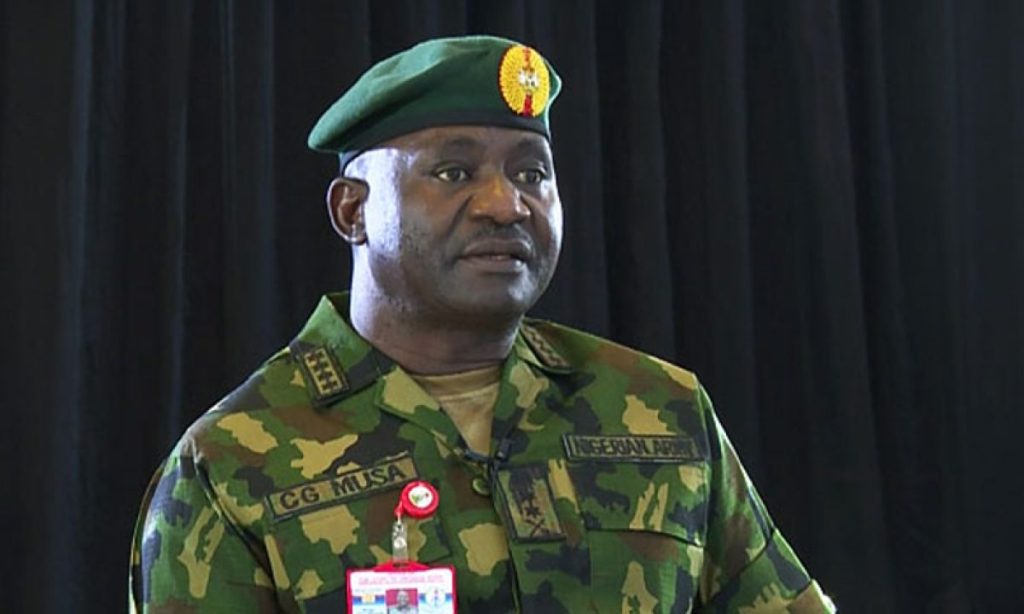
The Chief of Defence Staff (CDS), Gen. Christopher Musa, has explained that when military court martials are convened, they aim to invoke punitive but corrective measures, focusing on strengthening discipline, professionalism, and accountability within the Armed Forces.
“The Court-martial in the military is not meant to punish but to correct and preserve discipline, which is the soul of the Armed Forces.
“Its objective is to ensure fairness and accountability while keeping our forces combat-ready and professionally responsible,” he said.
The CDS made the disclosure at the public presentation of the book “Annotation of Cases on Court Martial,” co-authored by Maj.-Gen. Mahmood Wambai and Ali Omachi, Esq.
According to him, “the military justice system was designed to uphold fairness while maintaining the discipline required for effective national defence.
Emphasizing that the court martial process remains an indispensable instrument for enforcing service laws, Gen Musa commended the authors for producing a scholarly reference that deepens understanding of military law and supports ongoing reforms in the Armed Forces’ justice administration.
In his remarks, former Chief of Army Staff, retired Lt.-Gen. Tukur Yusuf Buratai commended the book as a milestone in Nigeria’s evolving military jurisprudence, bridging the gap between discipline, law, and democratic accountability.
He said the work reflects the authors’ deep commitment to justice and professionalism, noting that a credible military justice system is central to both operational efficiency and public confidence.
Buratai said, “The court-martial system remains the bedrock of military discipline and professionalism.
“A fair and transparent process enforces the Armed Forces Act and reinforces public trust that the military operates under the rule of law,” he said.
He cited landmark judgments such as Eweka v. Nigerian Army and Gideon Uweri v. Nigerian Army as precedents that continue to shape Nigeria’s military legal landscape.
Author of the book, Maj.-Gen. Wambai stated that the book was motivated by a desire to address misconceptions and technical errors that often lead to appellate courts overturning court-martial decisions.
He declared that a well-understood court-martial process safeguards discipline and protects the integrity of the Armed Forces.
“Many of such reversals stem from limited understanding of military law. Our aim is to provide clarity and ensure both military lawyers and appellate judges are properly guided,” he said.
Co-author, Ali Omachi, a private legal practitioner, said the book offers detailed commentary on appeal court decisions involving court martial cases, highlighting gaps that have weakened military trials over time.
Omachi said the book provided a comprehensive resource for judges, military legal officers, and scholars committed to advancing justice and discipline in the Armed Forces.
“We analysed several judgments and proposed reforms that can make the system more credible and efficient,” he said.
He added, “The essence of this work is to bridge the gap between the theory and practice of court martial law.”
The post Defence Chief explains why military court martials are convened appeared first on Vanguard News.