Dakuku Peterside and the rational analysis of national politics (3), by Usman Sarki
 SKAiF NewsNG SNN
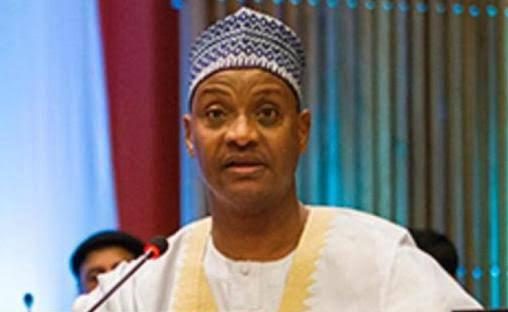
“The political establishment is now keenly aware that sentiments in northern Nigeria hold significant implications for the nation’s political future, where dissatisfaction or approval can decisively shift electoral fortunes“— , Dakuku Peterside, “2027: Battle for the Soul of the North”
The true test of politics is not in winning elections but in governing with reason. As Nigeria moves toward 2027, the country’s greatest need is for a new moral temperament in leadership that combines clarity of purpose with intellectual honesty. Rational analysis, as exemplified by Dakuku Peterside’s engagement with national issues, must now evolve into rational leadership, the kind that rebuilds trust, restores faith in institutions, and reconciles citizens with their government.
Trust has become the rarest currency in Nigerian politics. Citizens distrust politicians; politicians distrust one another; and both view the state as an unreliable arbiter. This corrosion of faith did not happen overnight. It is the product of decades of broken promises, cynical manipulation, and emotional politics devoid of principle. The spates of high-level decamping from one political party to another that we have been witnessing recently points to the fair weather nature of our politics and the absence of principles in our political practices.
These may be survival tactics on the part of our politicians, but survival for what purpose should be the burning question in all our minds. The task before the next generation of leaders, therefore, is not merely to manage the economy or captain the ship of state, but to rebuild the moral architecture of governance itself. Rational leadership begins with truth. A leader who tells his people the truth, however unpleasant, earns their respect. One who deceives them with sweet promises only to betray their hopes destroys the foundation of legitimacy.
The rational leader must therefore speak honestly about the nation’s challenges such as inflation, unemployment, insecurity, and social inequality, while outlining credible strategies to overcome them. Governance cannot succeed on propaganda or empty displays of power and wealth; it must rest on reason, competence, and measurable results.
The rebuilding of national trust will also require a moral reawakening among the elite. Nigeria’s crisis is not simply institutional; it is ethical. The tendency of the elite to treat politics as a private enterprise has drained the system of its moral vitality.
Rational leadership would mean redefining politics as public service, where accountability to citizens supersedes loyalty to godfathers. Peterside’s argument for fair and balanced engagement across regional lines reminds us that patriotism is measured not by rhetoric but by conduct.
Trust is also a product of consistency. Nigerians have seen too many abrupt policy reversals and half-hearted reforms. A rational government must be predictable in policy direction and steadfast in purpose. The economy cannot thrive when investors and citizens alike are kept guessing about the future. Stability of fiscal monetary policies, and political adroitness, is the foundation of confidence in any country.
At the heart of rational leadership lies empathy which is the ability to understand and respond to the realities of ordinary people. Leadership without compassion degenerates into mechanical technocracy; compassion without intellect leads to exuberant populism. What Nigeria requires is the balanced synthesis of both: intellectual clarity guided by human feeling. Only such a disposition can heal the wounds of poverty, exclusion, and resentment that have fractured our national psyche.
Rebuilding national trust also demands reform of the social contract. For too long, the Nigerian state has functioned as a dispenser of patronage rather than a guarantor of welfare. Citizens see government as distant and extractive, not as a partner in development. Rational governance would reverse this relationship by investing in people, especially in their education, health, and livelihoods, thereby transforming citizens into stakeholders. When citizens feel included in the process of national renewal, they become the defenders of the system, not its victims.
Equally important, is the restoration of integrity in public institutions. The civil service, long treated as an appendage of political expediency, must once again become the engine of continuity and professionalism. The judiciary must reclaim its sanctity as the last refuge of justice. The legislature must rise above self-interest and fear of the executive to reflect the moral conscience of the nation. Trust in government will grow only when these pillars of state regain their autonomy and credibility.
Rational leadership is not a solitary enterprise; it thrives within a culture of accountability. The media, civil society, and the citizenry must all embrace reasoned engagement rather than destructive cynicism. The press, in particular, must rediscover its vocation as an educator of public opinion rather than a purveyor of sensationalism. Public discourse must be anchored on facts, context, and national interest.
The coming political dispensation will also require leaders to exhibit strategic patience. The problems confronting Nigeria ranging from fiscal imbalance to insecurity are systemic and cannot be solved through impulsive fiat.
Rational leadership plans in decades, not electoral cycles. It builds institutions that outlive personalities and invests in knowledge that endures beyond slogans.
National trust further depends on justice. No amount of rhetoric can substitute for fairness in the distribution of opportunities and resources. A rational state must guarantee equity among regions, genders, and generations. Meritocracy should replace nepotism as the organising principle of public service. Justice, as history shows, is the surest path to peace. When citizens perceive fairness, they willingly obey the law; when they perceive bias, they withdraw their allegiance.
Peterside’s rational analysis of national politics therefore points to a larger philosophical truth: Nigeria’s redemption will not come through the noise of agitators but through the reasoned commitment of reformers. The political class must learn to listen to facts rather than to flattery, and to cultivate expertise rather than expediency. The electorate, too, must evolve by choosing leaders for their capacity to think, not merely for their capacity to distribute largesse or dangle appointments before them.
A new generation of rational leaders must arise from the ranks of men and women unafraid to confront entrenched interests, guided by data, driven by conscience, and inspired by service.
They must anchor Nigeria’s rebirth on integrity, productivity, and inclusion. They must speak the language of unity in a time of division, and restore dignity to public life. Such leadership will not emerge by chance; it must be consciously nurtured through education, mentorship, and example. Ultimately, the rebuilding of trust is a moral journey. It begins when leaders act as trustees rather than owners of power; when they measure success not by noisy applause but by impact. Rational politics is not an abstraction but the discipline of doing what is right, even when it is unpopular. Nigeria needs leaders who understand this, and citizens who will demand nothing less.
The 2027 elections will not merely determine who governs; they will reveal whether Nigerians are ready to reclaim reason as the compass of their democracy. If we choose wisely, if we elevate rationality over sentiment, justice over convenience, and truth over deception, then the long night of distrust may finally give way to a dawn of national renewal. In acknowledging Dakuku Peterside’s rational analysis, we are reminded that ideas still matter. Reason, when applied to politics, is not weakness but strength. It is the force that civilizes power and transforms ambition into service. Rational leadership, in the end, is nothing less than the triumph of conscience over chaos, and the only path by which Nigeria can rebuild both its trust and its future.
The post Dakuku Peterside and the rational analysis of national politics (3), by Usman Sarki appeared first on Vanguard News.