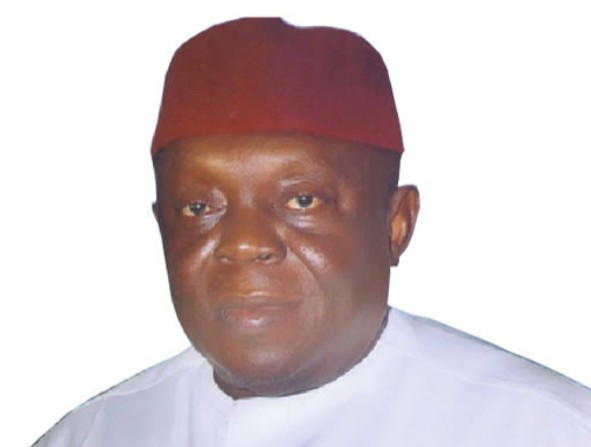
Critics wanted Uzodimma to fail, but he shocked them — Emelumba, Info Commissioner
 SKAiF NewsNG SNN
•Says Imo moving toward 24-hr electricity supply
•Dismisses claim governor runs state from Abuja
By Nnamdi Ojiego
As many states across Nigeria continue to grapple with poor electricity supply and infrastructure deficits, Imo State government says it is moving toward a 24-hour power supply system through the state-backed Orashi Electricity project. In this interview, the Commissioner for Information, Declan Emelumba, says critics who expected Governor Hope Uzodimma to fail were disappointed by what he describes as the governor’s transformative projects in roads, healthcare, electricity, security, and digital economy. He also dismisses criticisms over governor’s frequent presence in Abuja, insisting that the government has “ended business as usual” in the state through reforms, infrastructure development, and institutional changes. Excerpts:
Governor Hope Uzodimma’s administration often highlights road construction, urban renewal, and infrastructure. Looking back over the past five years, what would you describe as the government’s three most significant achievements?
You have already stated the first one. You saw yourself that there are so many quality roads across the length and breadth of Imo State. In the last six years, the governor has constructed over 440 roads cutting across the length and breadth of Imo State. The most critical and important ones are the ones that link virtually all the local governments, like the Orlu-Owerri Road, or you can call it the Owerri-Orlu Road, that connects about seven local governments and is aligned with solar street lights. The road defied every solution by the previous administration, especially one particular spot, the Njaba River. The previous administration spent billions, you know, but they couldn’t get it right. But if you pass through there now, you won’t believe that there was ever a problem there because the erosion has been contained and it’s a smooth ride now.
Then Owerri to Okigwe Road. There was a particular spot called Eke Emele. That was a nightmare for so many years. By this time of the year, it was not passable, so you had to pass through the bushes to be able to reconnect and continue your journey. But the government has fixed it and it’s so smooth now to the extent that the former Minister of Power, Professor Nebo, when he was giving a lecture at Nsukka, I was there, said that if you are talking about good governance, go to Imo State. He said it used to take him one hour and 30 minutes or so from Okigwe to Owerri, but it takes less than 40 minutes now.
The road is solid and spotless. This is somebody testifying. Just like the Bishop of Okigwe also said during his 25th anniversary as Bishop, he commended the governor for building the road and providing street lights. Then the one from Owerri to Port Harcourt, he has also done it. The one from Owerri to Onitsha, he has done it. If you are passing through that road, once you get to the boundary of Imo, you will see the difference. Unlike before, when you started seeing good roads only after leaving Imo, now the Imo roads are far, far better. And that is courtesy of the governor, without minding whether they are federal roads or not.
What about the Orlu-Obiohia-Akokwa-Uga Road?
Thank you for reminding me. I was going to come to it. You know, that road leads to former Governor Rochas Okorocha’s hometown and there was this rumour that he used to use a helicopter to visit home. I don’t know whether it is true, because the road was cut off at the Orashi River in Umuchima. The bridge was cut off completely. But you can see the quantum of work being done there. It requires an intentional person with vision, courage, and determination to do what the governor has done there, because it costs a lot of money. But he was determined and he has practically gotten it right because the road is almost completed now. So, in terms of road infrastructure, it speaks for itself. Then, of course, don’t forget the twin flyover. I think that’s the first flyover in Imo State since its creation.
But some critics say that flyover should have been a dual carriage, a two-lane bridge…?
The critics saying that don’t seem to understand. I don’t know the two lanes they are talking about. That’s why I said twin, and twin means two. So, if you are coming from Onitsha to Port Harcourt, you go right and you go left if you are going to Aba. So, it’s not like the bridge is a straight thing that should be dual carriage. The dual carriage was split, half this way and half the other way. I don’t know if you understand that. And of course, once you empty into the Port Harcourt Road, it’s a dual carriage. The same with the Aba Road via Bank Road,. So, it’s actually a dual carriage and as you can see, the bridge is serving its purpose. The second most significant achievement is electricity. You see this light we are enjoying here in my office? It is state-generated. It is called Orashi Electricity. It is what every public building in Imo is using. If you go to Government House now, that’s the light they are using. And it’s 24 hours electricity, very steady. Now, that’s the first phase. The first phase has covered all public buildings. The second phase, which is in rapid progress, will cover the whole of Owerri. In the next few months, everybody in Owerri will have access to it, except you don’t want to subscribe. You don’t need EEDC or whatever . You have an alternative, credible alternative that will give you 24 hours of light. And, of course, we are hoping that before the end of the governor’s tenure, it will cover the rest of the state. The most important thing now is that it is on. That’s what you and I are enjoying here now.
Economic Summit
And, of course, if you talk of the third one, last December, we held what we called the Imo Investment and Economic Summit. That’s the epitome of the governor’s desire to industrialize the state. That vision is what made him provide this electricity. That vision is what made him establish the Orashi Energy Free Zone. That was the same vision that made him bring investors from all over the world to come and see that Imo is ready for business, that all they need for business is now here. And they came and they saw. So, in terms of positioning Imo for industrialization and investment, that is the major achievement we have made. Everybody saw it when they came.
Critics argue that despite visible infrastructure projects, many rural communities still lack basic amenities such as healthcare, potable water, etc . How would you respond to claims that development has been concentrated in a few urban areas such as Owerri, Okigwe and Orlu?
Well, in the first place, I thank God that critics are now admitting that development has gone as far as Owerri, Okigwe, and Orlu. These are the three major urban areas. So, if the government has succeeded in taking development to those areas, because they were not there before, that’s a major credit. Having said that, if you take a tour around the rural communities, you will find that many of them are also connected to these major roads that we are talking about. In terms of health, we are building a modern primary healthcare centre for each of the 305 wards in the state. That work is in progress. We also building five new general hospitals spread across different local governments, none is located in Owerri. They are all in the rural areas. One is in Omuma, one is in Ohaji-Egbema, one is in Oguta, and one is somewhere around Mgbirichi. So, these are rural areas. And they are brand new general hospitals that meet international standards, set up with steady supply of drugs, and well-skilled manpower. So, that doesn’t sound like the rural areas were forgotten, I don’t think so.
One recurring criticism is that Uzodimma governs Imo largely from Abuja and is often absent from the state. How do you respond to this?
Honestly, those saying that are not well-informed because, first of all, it’s not true. The governor visits Abuja, there’s no doubt about it because he has a number of other responsibilities. He’s the Chairman of the Progressive Governors Forum. He’s also the Director-General of the Renewed Hope Ambassadors, and these positions make it mandatory that he goes to Abuja once in a while. He is always here in the state and has not been absent from any major state function because he was in Abuja. And there is nothing lacking in terms of administration. I think what is important is, is the government working? And the answer is yes. If the government is working, then what do the people complaining want? Do they want to eat his flesh? But again, I’m really happy because, when we started, these were not the kinds of criticisms we received. What is happening now is that people have seen that the man has performed beyond their imagination and are now looking for things like, “he’s always in Abuja”, to discredit him. They are now looking for things because there’s nothing else to say. Would you say he has not worked, or he’s not working? Because even in his second tenure, he’s working like somebody who is going to contest for a third tenure. So, the critics are so disappointed.
I read somewhere one of them said Hope has disappointed them because they thought he was going to fail. They were waiting for him to fail because they thought he was just going to come and be doing party thing and all that. So they are surprised he disappointed them.
Opposition parties and some civil society groups have repeatedly accused the administration of interfering with local government allocations and weakening local government autonomy. Can you clearly explain how council funds are managed under this administration?
You know, the beauty of this thing is that government business is a business that must be documented. It’s not a hearsay arrangement. Like the lawyers will say, “he who alleges must prove.” If you say the LGA chairmen are being given N100 million instead of N500 million, for instance, bring the document because there’s no way that could happen without documentation. It’s not possible.
Is the state government not interfering with the LGA fund?
If anybody says the state government is interfering, there must be evidence. The point I’m making is that there must be evidence. What I know is there is this Joint Allocation Committee between the state and local governments. It’s established by law. That is where decisions are taken when the money comes. This joint committee includes local government representatives, the chairmen, and state representatives, which is a legal thing. That has always been there. So, there’s nothing in any way that suggests that the governor is tampering with local government funds. If you go to the local governments, you will see that they are working. You will see that they are discharging their responsibilities. And I think that if what people are suspecting is true, by now, to the best of my knowledge, it wouldn’t still be living in the realm of rumour. By now, they would have had evidence that they would publish. But right now, there’s no evidence because there’s nothing to find. It’s just like looking for something where there’s nothing.
Are you saying that the LG chairmen are given a free hand to operate?
Of course. I hope you know that they were elected. So, if somebody is elected, then you are accountable to those who elected you, isn’t it? So, if for any reason you are not accountable to them, that’s their headache, not anybody else’s headache.
Security remains a major concern in some parts of the state despite the government’s assurances that the situation has improved, what specific measures has the administration taken to say that the state is safer today?
Well, one of the measures is that the government has invested so much to support the police, military, civil defence, and others by providing them with equipment and logistics. And that has helped. At the end of the day, the insecurity situation has practically been arrested because the government really put its mind to it. And there is clear evidence today that the security situation has practically returned to normal. In the past one or two years or so, the Guild of Editors has hosted their meeting here. Before now, none of them would want to come. I remember there was a time they came, sometime about three or four years ago, when I was taking them around Orlu, some of them wanted to jump out and say, “No, no, no. So this is Orlu they say is a no-go area?” But that was then. Now, they come and walk around. They don’t need guidance. We have hosted high-profile conferences, seminars, and so on. And Imo is no longer always in the news for one security challenge or another.
Another measure is that the government asked the town unions to form vigilantes in their various communities and LGAs because, as you know, security is local. The idea is that if every community is in charge of its security, it would be very difficult for outsiders to cause problems. The government empowers and even pays stipends to the vigilante members. At the end of the day, when we were able to use conventional security to arrest this situation, to sustain it means these vigilantes provide conventional security with primary intelligence. And because the criminals in those communities now know they are being watched by their own people, many of them have fled. So, that has really helped greatly.
Imo politics has remained deeply polarized since the Supreme Court ruling that brought Uzodimma to office in 2020. In hindsight, do you think the administration has succeeded in politically uniting the state?
Well, on the contrary, I would say that it was the Supreme Court judgment which restored the truth and restored justice because this is a man who won an election clearly. And I’m happy that I was involved. I was a participant. I saw what happened. Somebody won an election, and very mischievously, results from 388 polling units were removed. But God made it possible for him to insist that they should be included. And then, when he got to the Supreme Court, the court saw that he was right. There was no reason why INEC didn’t include those results because INEC certified them as correct. The PDP that was challenging the results said they were fake, but the court asked them to bring the correct ones, and they couldn’t do it.
Now, contrary to what you’re saying, that it polarized the state politically, it was actually a watershed moment. It was from that beginning that the unification of the state politically started. If you remember, in 2020 when we came in, the state was divided into pieces, not even two. So many political forces were fighting – those claiming this, and those claiming that. But over the years, people have come to see that this is a man that has God’s blessing to come and rescue, restore, and bring justice to Imo. Almost every political gladiator in the state today, let me not exaggerate, I can tell you that 80 percent of the political gladiators in the state are united with the governor in APC. Before, APC was like a pariah party. Nobody wanted to identify with the party because of the way it was being run, like a family affair. So, a lot of people were not interested. But he came and started bringing people together. People started seeing that this is a man who stands for justice. So today, as we speak, 80 percent of political gladiators in the state are on one page. The other 20 per cent is normal. You can’t have 100 per cent. So rather than polarize the state, the governor has united the people. Recall last year, many people were surprised that former Governor Emeka Ihedioha attended the Imo at 50 celebration and received an award. So the governor has politically united the state.
As Information Commissioner, do you think the administration has done enough to tolerate criticism and encourage open democratic engagement?
I think this state is a model of tolerance in terms of freedom of speech and freedom of expression. I’m sure it will surprise you to hear that Imo is the capital of local newspapers in Nigeria. There are more than 30 Imo-based newspapers and most of these people who publish these things don’t have any training in journalism. So, they don’t know what the rules of journalism are all about. They publish whatever they like, and we read them. But not one will tell you that they have been harassed by the government. And it’s not as if the government doesn’t know what to do or is weak. No. It’s because the governor has insisted that there must be freedom of expression, even when that freedom of expression goes as far as being abused. We restrain ourselves because we also believe that it cancels itself out at the end of the day. So, the government has very elastic endurance for criticism, even criticism from the media and others.
As the administration moves closer to the latter phase of Governor Uzodimma’s tenure, what would you say is the biggest misconception about this government, and what do you think history will remember it for?
Well, the biggest misconception, if there is really any, is that a lot of people had the idea that this government would continue to do “business as usual.” For example, before, accountant in this Ministry of Information, at the end of the month, would prepare a payroll and say, “Release 50 million for payment of salary,” and the government would release it because that system was fraudulent and a lot of people, including top government officials, were benefiting from it. That’s not happening anymore because the system is automated and doesn’t allow such situation. The business as usual includes leakages in the tax payment system and so on. The government’s processes before now were rotten. And it looked like every government that came saw a reason why they shouldn’t touch it. That misconception that was there in the beginning was shattered. And I think that informs the accusations and criticisms particularly from those who were benefiting from it because they lost out.
Then what the government will be remembered for? I think this governor will be remembered for coming up with transformative, innovative, visionary, and creative ideas that transformed the state. It is a government that transformed the state practically. Transformative signature projects have changed the face of the state in almost every facet – infrastructure, healthcare, and youth empowerment.
The post Critics wanted Uzodimma to fail, but he shocked them — Emelumba, Info Commissioner appeared first on Vanguard News.