Crazy piloting near Asaba airport
 SKAiF NewsNG SNN
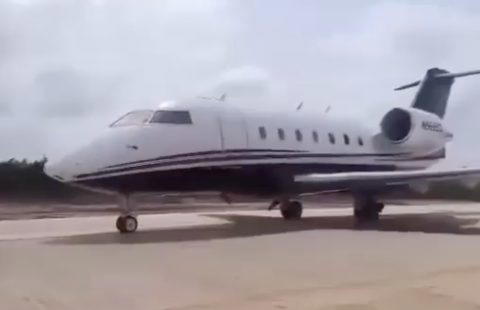
On Wednesday, June 10, 2026, at 7:43 a.m. a private jet departed Lagos bound for Asaba Airport in Delta State. What should have been a routine thirty-minute flight instead became a horrible aviation misadventure exposing how recklessness could endanger thousands. The aircraft attempted landing at Asaba but missed the runway, triggering a “missed approach” procedure.
The pilot’s correct response demanded immediate execution of a “go-around”—climbing back, circling, and attempting proper landing. Instead, the pilot exhibited behaviour verging on lunacy. He landed directly on the Okpanam-to-Second Niger Bridge bypass road under construction at Ogwashi-Uku, Delta State—a concrete expressway, not an airport runway.
Degrees of madness followed. After landing on the road, the pilot did not call emergency assistance. Rather, he taxied the aircraft along the expressway, then took off from that road at approximately 11:02 GMT—three hours later—returning to Lagos without first obtaining clearance from air traffic controllers. Air traffic control was notified only after the aircraft became airborne.
This brazen violation of Nigerian Civil Aviation regulations constitutes professional misconduct bordering on criminal negligence. The dangers that could have emerged are catastrophic. The road carries vehicular traffic. A collision with vehicles could have killed dozens. The aircraft’s wheels might have failed on the uneven construction surface, causing it to shatter and explode. Fuel lines could have ruptured, igniting a fireball visible from Asaba. Passengers or crew could have been trapped, requiring rescue teams to cut through the fuselage.
Worst still, if the aircraft had lost control during takeoff from the road, it could have crashed into nearby homes, schooling children, or busy market, turning mistaken landing into a mass-casualty disaster. Three actions must follow immediately. The Nigerian Civil Aviation Authority should permanently revoke the pilot’s licence and prosecute him criminally for endangering public safety. The operator’s Permit for Non-Commercial Flight (PN-CF) must remain suspended indefinitely, with operational, maintenance, and airworthiness records subjected to forensic audit.
Anyone who colluded—including co-pilots, ground crew, or operators involved in the unauthorised departure—must face identical disciplinary and criminal proceedings. Pilots confronted with uncertainties like poor weather, instrument failure, or runway misalignment, must prioritise one rule: safety over pride – execute the go-around immediately, climb, and re-attempt. If conditions remain unsafe, they must divert to the nearest viable airport and communicate with air traffic control before every decision. They must never land on unintended surfaces or depart without clearance. Passengers’ lives and public safety depend on disciplined adherence to procedure, not ego-driven improvisations.
The Asaba road incident was not merely a mistake; it was a near-disaster born of crazy decision-making. The crew survived unhurt, but luck is not a safety strategy. Nigerian aviation authorities must treat this as warning: zero tolerance to recklessness. The profession must self-correct before tragedy demands it.
The post Crazy piloting near Asaba airport appeared first on Vanguard News.