Borrowing without visible projects worrisome — Oyerinde, NECA DG
 SKAiF NewsNG SNN
—Nigerians worse off despite economic stability claims
—Power crisis feeding inflation, killing businesses
—Nigerians want cheap transport, affordable food, accommodation not grammar
By Victor Ahiuma-Young
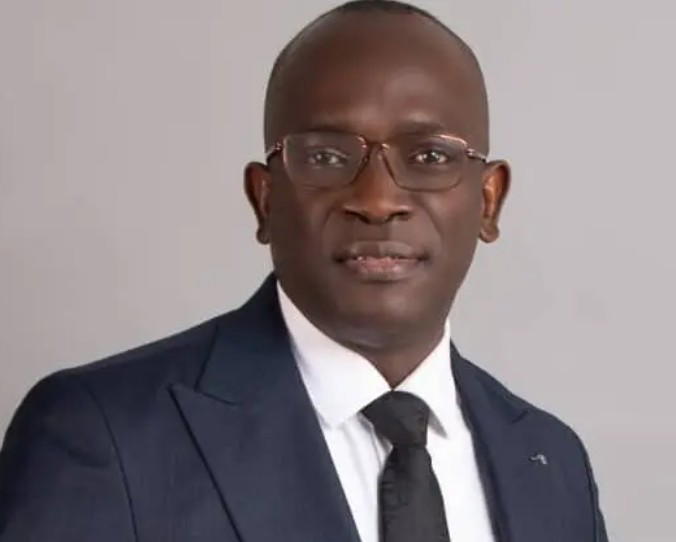
As Nigeria grapples with rising inflation, mounting debt, worsening living conditions and persistent power shortages, the Director-General of the Nigeria Employers’ Consultative Association (NECA), Wale-Smatt Oyerinde, has raised serious concerns over the state of the economy, warning that ordinary Nigerians are yet to feel the impact of the government’s much-publicised economic reforms and stability measures.
In this interview, Oyerinde says borrowing without visible projects has become increasingly worrisome, stressing that citizens deserve to see tangible evidence of how public funds and subsidy savings are being utilised.
He argues that despite claims of macroeconomic stability, the average Nigerian worker and household are worse off due to soaring transportation costs, expensive food, rising accommodation expenses and declining purchasing power.
The NECA Director General also speaks on the worsening power crisis, which he says is feeding inflation and crippling businesses, while insisting that the government must prioritise practical solutions that directly affect the people rather than “grammar” and policy pronouncements that fail to improve daily life.
He further addresses the removal of fuel subsidy, the state of the refineries, borrowing, privatisation and the urgent need to strengthen local production and support businesses as a pathway to genuine economic recovery.
Excerpts:
What is your general assessment of the socio-economic condition of the nation since the beginning of the year?
We will gauge the economic temperature from three or four different perspectives.
The first is what is out of our control, which happens to be the current US/Israel-Iran conflict, which has created a quagmire at the Strait of Hormuz, and the consequences of that are trickling down to all nations. GDP and growth projections have been reviewed globally for many countries. The challenge is real, which naturally has affected many indices.
The second area where we look at it is from the perspective of what we can control. While we cannot control what is happening at the global level, what is happening at the local level can be controlled. Even before the challenges at the Strait of Hormuz, there were conversations about stability at the macroeconomic level, which had not translated effectively to the microeconomic level, something President Bola Tinubu also alluded to.
Whatever growth we are touting or claiming to have must not only exist at that level; it must translate to the average worker. The average Nigerian household must feel it.
Now, is the average household feeling it currently? Not absolutely. Is the worker feeling it currently? Not so.
The rate of inflation from different perspectives, exacerbated by the challenges in the Middle East, is making things a bit worse for the average individual.
We also look at it from the third perspective, which is the perspective of disposable income and the daily cost of living as we currently have it.
Some have said the government has tried to cushion the challenges arising from the war in the Middle East through increased welfare for public servants and so on. But in concrete terms, public servants are not more than one per cent of the general population. The majority of citizens are facing these challenges.What immediate measures do you expect from the government to ensure that, while this crisis lasts, Nigerians do not suffer more than expected as an oil-producing country?
Is it rosy? Absolutely not, because the value of the naira, even while we are experiencing some stability in it, still means that the minimum wage and every other context you might want to look at regarding sustainability are not really adding up.
The fourth and last perspective I will look at is from the perspective of business.
Is the average business experiencing prosperity currently? Not necessarily. We are not experiencing prosperity.
Are there some semblances of stability? Yes, there seems to be some semblance of stability because of what we have witnessed in the foreign exchange market and in interest rates. That has made doing business a bit more predictable, which also gives organisations the opportunity to plan.
But we are not out of the woods yet. We are just hoping the government will continue to deepen interventions, policies and programmes aimed at promoting private sector growth. Because it is through private sector growth that we can kick-start the real economic growth we are talking about.
While we note that recently the government rolled out welfare packages for Nigerian civil servants, bringing back gratuity, exit packages and several other measures to increase workers’ welfare in the public sector, we also hope the government will take a corresponding look at supporting organised businesses more, so that we are also in a position to support private sector workers more, even though the private sector is still far ahead in the context of workers’ welfare.
You talked about the issue of the economy and how the perceived growth in the economy is not translating into prosperity for ordinary Nigerians.What practical steps do you expect from the government to ensure that the growth trickles down to the ordinary man?
You know, economics identifies about three or four wage goods that an average employee or worker spends his wages on. If we give attention to those goods, then there is a tendency for more cash and disposable income to be available to the individual, which can increase their propensity to buy and enjoy some level of comfort.
Those three or four wage goods include, first, shelter. A large chunk of an average individual’s income goes into accommodation. We know how Shylock-like many landlords have become, to the extent that the Lagos State Government had to come up with a rent law or rent regulation. The government needs to do more in the area of mass housing estates for workers. If you take care of housing, you have taken care of a significant worry for the average household.
The second area is transportation. The dynamics of transportation are such that once there is an increase — just as we are experiencing now because of global challenges and a war we are not part of — it affects everything. Once the price of crude goes up, it affects the cost of petrol and diesel. Once the price of petrol or diesel goes up, it affects transportation costs, logistics costs, and everything else in the value chain. So, because the cost of crude has gone up, the price of petrol rises, transportation costs rise, food prices go up, house rents go up, because everything is connected to that issue.
For us, we need to address the issue of transportation. Let’s commend the government for the introduction of Compressed Natural Gas (CNG) buses, but we need to do more in that regard. The government needs to invest more in it. What they have done is commendable, but we need greater investment in CNG buses. We also need to invest more in light rail systems, just as the Lagos State Government is doing. Other states also need to take a cue from Lagos. Light rail is a very reliable and affordable means of transportation.
So once you take care of housing and transportation, then you also have to address food. Food is another key area where the majority of people’s income goes. We need to tackle it through improved security, because once we achieve food security, it will progressively reduce the cost of food.
Lastly, there is the cost of education. We need to restore our public schools to the standards they once had. Sending a child to a private nursery or secondary school in this environment is becoming increasingly out of reach for the average Nigerian.
Again, I come back to the issue of transportation and security. Deal with transportation and deal with security. Those are two of the biggest challenges facing SMEs and MSMEs today.
No matter what you buy or how affordable it is, if transportation and logistics consume a large chunk of the cost, then it becomes inaccessible. The government must address transportation and security because, at the microeconomic level, those are the real issues affecting businesses. If the government addresses the issue of production and makes production cheaper — not expensive — for MSMEs and businesses generally, then the impact will be felt across the economy because we all go to the same market. Even the one per cent of public workers we talked about still buy from the same market as the remaining 99 per cent of Nigerians.
The challenges MSMEs and SMEs face are eventually transferred to the buying public. So, let us address those fundamental issues surrounding the ease of doing business for MSMEs and SMEs. Once we deal with those issues, we would have positioned ourselves to resolve the critical problems in this economy.
Now, when we talk about the naira trading at N1,300 and something to a dollar, is that okay? Is it good? We believe no. For the general good of the economy, the naira should ideally be below N400 or N500 to the dollar. To achieve that, we must create structures that reduce pressure on the naira because exchange rates are fundamentally about demand and supply. The more naira chasing dollars, the higher the value of the dollar.
That is why we support the Dangote Refinery and every productive venture that can help us conserve foreign exchange. If we progressively reduce our dependence on dollars and reduce demand for foreign exchange, then the value of the dollar against the naira will begin to fall. If everything I need can be produced and bought locally, why would I need dollars? So, once we address those fundamentals, we would have positioned ourselves firmly on the path toward economic recovery for this nation.
Recently, the Minister of Finance said the government has no plans to bring back fuel subsidy.
Nobody expects the government to return to subsidy. But are there no other areas that can be subsidised, as done in other parts of the world, such as the pharmaceutical industry? In fact, this is a very wrong time for anybody to fall sick. Can’t the government subsidise production in sectors like pharmaceuticals and other critical industries to ensure that once these sectors are stabilised, the gains will trickle down to the economy?
I agree with you. First, bringing back subsidy should not even be part of the conversation because we have seen that it was largely a charade, and the evidence has shown that clearly. But the government needs to set its priorities. In setting those priorities, it must determine exactly what it wants to achieve. For successive governments, priorities differ. Some people may say a particular project should not be a priority, while others may insist it is important. For example, some people have argued that the coastal road project is not a priority for Nigeria at this time. But other stakeholders believe that the infrastructure is necessary to connect the country and drive economic growth from another perspective. The government itself has said the coastal road is a priority and that it is overdue. So every government must decide what it wants to achieve.
In our own situation, there are many peculiarities and contradictions that we are dealing with. We have talked about healthcare, transportation, and primary healthcare systems. At the same time, we know that allocations to states and local governments have increased massively, in some cases tripling what they previously received. The question we are not asking is: what exactly are the states doing with those revenues?
Primary healthcare falls within the responsibility of local governments. The Federal Government has even succeeded in getting a Supreme Court ruling affirming that local governments should receive allocations directly. So, what exactly are local governments doing? What are citizens doing to ask questions?
If primary healthcare is under the jurisdiction of local governments, then what exactly are our local governments doing with their resources?
These are the critical questions we are not asking.
There are enough resources if they are used judiciously. Local governments are responsible for fixing local roads. They are responsible for providing primary healthcare services. Imagine if every local government could establish at least one standard primary healthcare centre within its area. Wouldn’t that significantly address many of these issues?
And we agree that it is dangerous to fall sick in this environment because of the high cost of healthcare. As healthcare costs continue to rise, we are also creating another problem for ourselves. If people cannot afford proper medication, they resort to unregulated local herbs, which can create even more health complications because there are no proper dosages or standards for many of those remedies. Eventually, when the situation worsens, the person returns to the formal healthcare system, which they should have gone to in the first place.
So, you are absolutely right that the government needs to set its priorities properly.
What the average Nigerian wants are practical things — beyond grammar — things that directly affect daily life.
I want to move from Ikeja to Mile 2 and have affordable transportation available. If I fall sick, I want to go to the hospital, get treated, and buy affordable drugs. If I am hungry, I want to go to the market and buy food without paying through my nose. I want to move around my neighbourhood without fear of kidnapping or harassment.
Those are the basic things.
We hope governments at all levels will set their priorities right so that the average Nigerian will not only see economic growth on paper, but will also experience that growth in daily life.
Yes, the government is making more money after the removal of subsidies, yet it is also borrowing more. Some have raised concerns that we may be borrowing beyond our capacity to repay. What are your thoughts on this?
Many of the promises made around subsidy removal suggested that savings would help fund development, but to the best of public understanding, those gains are not clearly visible, while borrowing continues to rise. Is the Nigerian economy still in a position to sustain this level of borrowing?
Well, the issue of capacity usually boils down to the debt-to-GDP ratio. There is a standard parameter for assessing whether a country’s debt level is sustainable. Once the debt-to-GDP ratio goes beyond acceptable limits, even creditors become cautious. Nobody gives out money as a gift. What lenders assess is not just fiscal discipline, but whether the borrower has the capacity to repay. They also look at whether what you are borrowing for is a viable project that can generate returns to service the debt. These are the key parameters.
For us, the issue is not borrowing itself; it is the control and management of the borrowing. In a system with strong checks and balances, borrowing inspires more confidence. But when a President submits borrowing requests to the National Assembly and they are approved within a very short time, it becomes worrisome. There should be deeper scrutiny. We should interrogate what exactly the loan is for. We should interrogate how the project will be executed and monitored. We should also interrogate how repayment will be made. If these questions are not properly addressed, concerns about debt sustainability will continue to arise.
More importantly, Nigerians are coming from a period where we have consistently borrowed, yet living standards have not significantly improved in line with the level of borrowing. That is a major concern for stakeholders. So the real question people are asking is: what exactly is this borrowing for?
The government also needs to communicate more effectively. If subsidy has been removed and there are supposed savings, citizens should be told clearly what those resources are being used for. For example, if ASUU arrears have been paid or if outstanding obligations, such as debts to foreign airlines running into billions of dollars, have been cleared, these are things Nigerians should know. The government must explain how subsidy removal savings, if any, are being utilised.
Because even the Minister of Finance has suggested at some point that it was not really about “saving” money, but about stopping the practice of printing money to fund subsidy payments. In other words, the issue was more about halting monetary expansion than accumulating cash savings. So when the government says it is no longer paying subsidy, what it really means is that it is no longer printing money to fund it. That is why it is now buying at market rates.
However, the government must communicate these dynamics clearly so citizens can understand what is going on. When you listen to the Minister of Finance, you may understand one perspective; when you listen to others, you may hear another. There needs to be clarity.
Nigerians need to understand the rationale behind borrowing. If we borrow, say, 10 billion dollars, and we can visibly see a functional project—like a railway from Abuja to Jos that is operating and generating revenue—people can easily connect with it. They can see that the project will earn revenue, repay the loan, and service the interest. But when borrowing is done without visible, tangible outcomes, it naturally raises concerns.
How are your members as employers coping with these challenges of power, communications, and others, and how does this tie into job security and employment creation?
One of the biggest challenges is power. The Minister of Power came in with good intentions, but I think he was a bit overwhelmed by the scale of the problem. Circumstances have now made the situation even more difficult for everyone. It reflects a contradiction we have long struggled with in the sector.
There was a report earlier this year showing how much organised businesses spend on power. When businesses spend that much on energy, it feeds directly into production costs, which in turn increases the cost of goods and services. Ultimately, consumers bear the burden. That is the reality we are dealing with, and it is not healthy for the economy.
We hope the new Minister of Power, who has spoken about achieving significant progress within 100 days, will be able to deliver. More importantly, we expect stronger engagement with stakeholders so that practical, workable solutions can be achieved.
The post Borrowing without visible projects worrisome — Oyerinde, NECA DG appeared first on Vanguard News.