
Artemis 2 astronauts break record for travelling furthest from Earth
 SKAiF NewsNG SNN
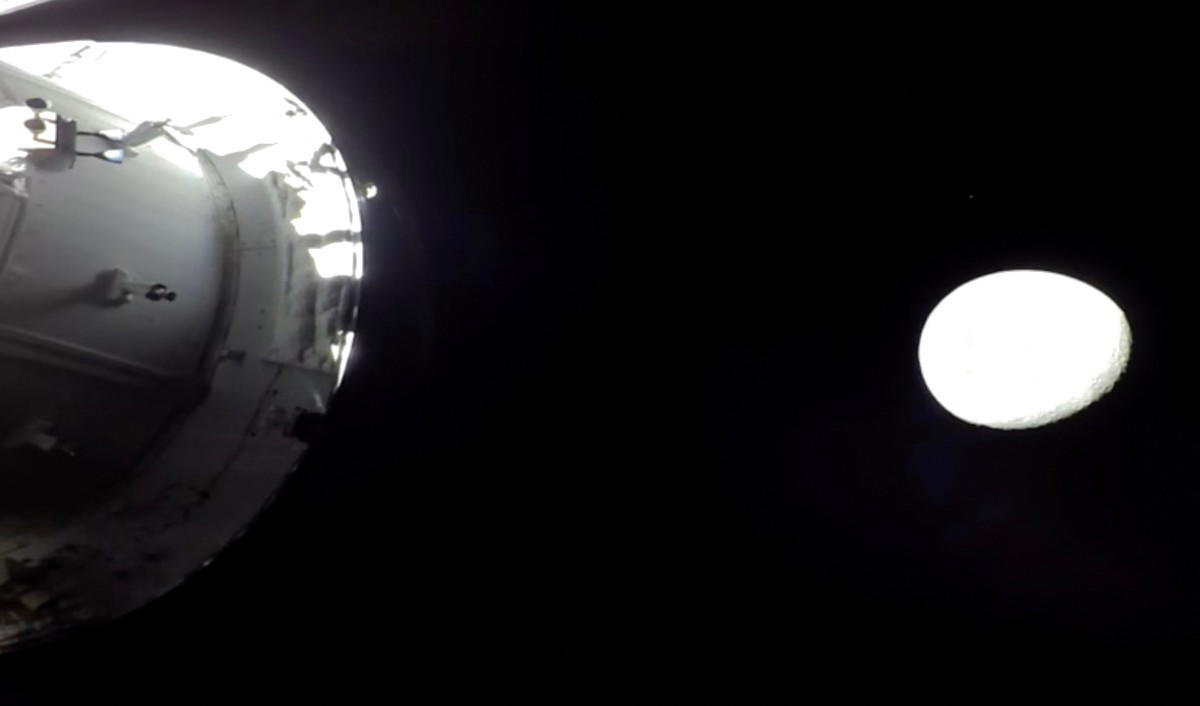
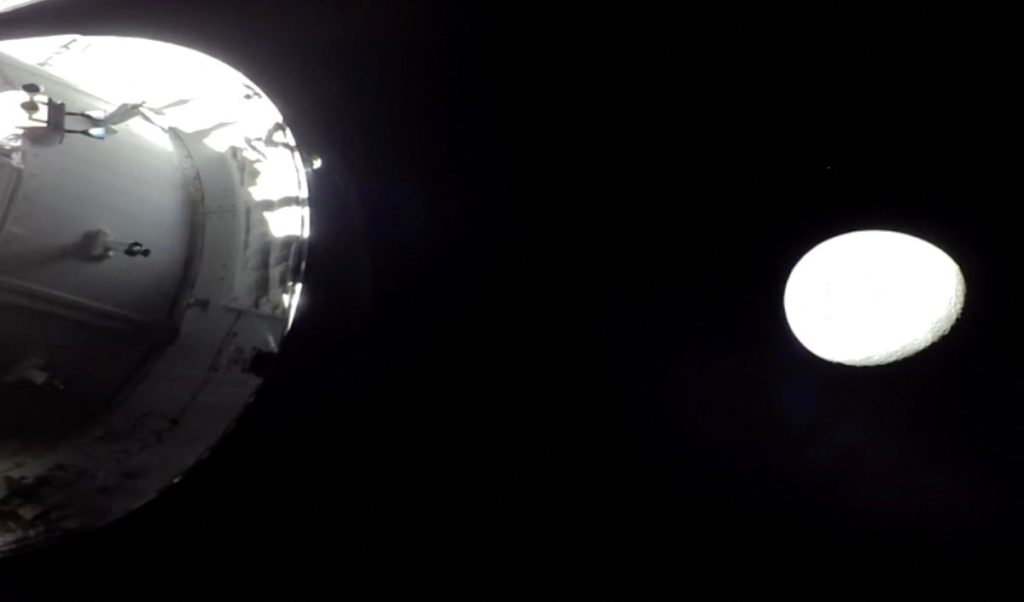
The crew of the Artemis 2 lunar mission has travelled further from Earth than any humans ever before, the US space agency (NASA) announced on Monday.
Florida (United States), April 7, 2026 (dpa/NAN) The crew of the Artemis 2 lunar mission has travelled further from Earth than any humans ever before, the US space agency Nasa announced on Monday.
The four astronauts travelled 406,711 kilometres from Earth, eclipsing the 400,171 km record set in 1970 by the crew of the Apollo 13 mission.
The Artemis 2 crew – U.S. astronauts Victor Glover, Christina Koch and Reid Wiseman and Canadian astronaut Jeremy Hansen – lifted off on Wednesday evening aboard the Orion capsule on the Space Launch System rocket from the Cape Canaveral spaceport in the U.S. state of Florida.
The crew became the first to see some parts of the far side of the moon with human eyes.
They also witnessed a solar eclipse as the moon passed in front of the sun.
During their lunar flyby, a fleet of cameras captured imagery of the moon, including features humans have never directly seen, NASA said.
Hansen said the lunar flyby was an “extraordinary” experience.
“When we were on the far side of the moon, looking back at Earth, you really felt like you weren’t in a capsule.
“You’d been transported to the far side of the moon. And it really just bent your mind,” he said.
Koch said she was not ready to return to Earth just yet. “I’m not ready to go home,” she said.
“I can’t believe that something this cramped of quarters can fly by and still be fun every single minute.”
In addition to their spaceflight record, the crew suggested naming two craters on the moon during their flight.
The first is named in honour of their spacecraft, Integrity.
The second honours Wiseman’s late wife, Carroll, NASA said.
After the mission is complete, the crater name proposals will be formally submitted to the International Astronomical Union, the organisation that governs the naming of celestial bodies and their surface features.
Hansen said the mission was also intended to honour the crew’s predecessors in human spaceflight.
He said the achievement should “challenge this generation and the next to make sure this record is not long-lived”.
Earlier on Monday, NASA said they had reached the moon’s sphere of gravitational influence, meaning the point at which the moon’s gravity has a stronger effect than Earth’s.
For Glover, Koch, and Wiseman, this is their second spaceflight; for Hansen, it is his first.
Koch is the first woman on board a NASA lunar mission, Glover the first non-white person, and Hansen the first Canadian.
The flight path of the Artemis 2 resembles a figure of eight around the Earth and the moon.
The four astronauts are set to cover a total of more than 2.3 million kilometres before returning to Earth in the Pacific Ocean.
The crew is scheduled to splash down off the coast of San Diego on Friday.
NASA administrator Jared Isaacman wrote on X the crew were now on their journey home.
“Before they left, they said they hoped this mission would be forgotten, but it will be remembered as the moment people started to believe that America can once again do the near-impossible and change the world,” he wrote.
“Congratulations to this incredible crew and the entire NASA team, our international and commercial partners, but this mission isn’t over until they’re under safe parachutes, splashing down into the Pacific.”
The first person on the moon was Neil Armstrong on July 20, 1969.
The last person to leave the moon to date was NASA astronaut Eugene Cernan, who died in 2017, during the Apollo 17 mission in December 1972.
In total, the United States – the only country to have done so to date – sent 12 astronauts to the moon between 1969 and 1972 as part of the Apollo missions. (dpa/NAN)
The post Artemis 2 astronauts break record for travelling furthest from Earth appeared first on Vanguard News.









