Aji-Ereke, Ebonyi cultural festival that unites Christians and traditional worshippers
 SKAiF NewsNG SNN
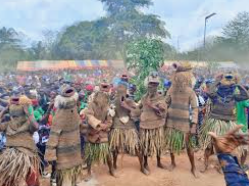
…We keep religion aside, embrace, dance, eat for unity, reconciliation — Community
…Its celebration marks beginning of farming season
…Don’t allow your culture to die — Gov. Nwifuru charged the people
…Rep pledges to make festival a national tourism event
By Jeff Agbodo
AMAGU community in Ikwo Local Government Area of Ebonyi State has kicked off the 2026 farming season with the celebration of Aji-Ereke Cultural Festival. It is a traditional ceremony that ushers in a new farming season, revives cultural heritage, and fosters unity among the people.
The eight-day cultural festival, which began on April 18, 2026, marked the end of the traditional calendar year and signalled the start of a new farming season.
The ceremony, which brought together thousands of indigenes, residents, and visitors, served as a revival of Ikwo traditions as well as a platform for reconciliation and communal peace.
Deeply tied to the agrarian lifestyle of the community, the Aji-Ereke festival is greatly revered by the Ikwo people.
The festival, which was held at the Amagu Erimogwudu playground, featured rich cultural displays, including masquerades, the Ereke dance and other traditional music displays; and an opportunity for families and loved ones to exchange gifts. The festival has become a significant annual event in the area, bringing people together to reinforce social stability and boost local tourism.
The 2026 celebration was boosted by the presence of top state officials, including Ebonyi State Governor, Francis Nwifuru, who was represented by his Principal Secretary, Chief Mathias Adum; Senator Ken Eze, and Hon. Chinedu Ogah, traditional rulers, among others, who urged residents to uphold their heritage and support the administration’s developmental efforts.
With the festival done, the people of Amagu Erimogwudu, an ancient community in Ikwo, have officially commenced the 2026 farming season.
Despite its culture and traditional roots, the celebration coexists peacefully with modern religious beliefs, as many Christians actively participate without reservations.
Aji-Ereke festival, according to historical accounts, is an age-long tradition introduced by the forefathers of the community to mark the beginning of a new year in the local calendar. It also serves as a signal for the commencement of farming activities. By tradition, no indigene is permitted to plant yam seedlings or engage in any form of farming activities until the Aji-Ereke trumpet is sounded.
The festival is characterized by rhythmic drumming and cultural displays believed to awaken the spirits of their ancestors and inspire the people for the farming season.
Speaking at the event, the Ebonyi State Governor, represented by his Principal Secretary, Chief Mathias Adum, stressed the importance of preserving indigenous culture. He lamented that many Igbo traditions are gradually fading due to the influence of foreign languages and cultures, and urged the people to uphold and guard their cultural heritage.
Nwifuru underscored the importance of cultural preservation as a cornerstone for sustainable development, warning that societies that neglect their heritage risk losing their identity and future.
“Culture remains the fulcrum of human existence. People who lose their culture risk losing their future. What we witness here is culture at its finest, capable of driving tourism, economic expansion, and social cohesion.”
He urged youths to embrace indigenous language and traditions despite increasing globalisation, stressing that meaningful development must be rooted in local values.
In his remarks, Senator Ken Eze, representing Ebonyi Central Senatorial District, described culture as a defining element of identity and a unifying force within communities.
“I have come home to celebrate with my people. Culture defines who we are. We must sustain this noble heritage to project our identity globally,” Eze stated.
A member of the House of Representatives, representing Ikwo/Ezza South Federal Constituency, Rt. Hon. Chinedu Ogah, who sponsored the festival, expressed his commitment to promoting cultural values.
He described the festival as a unifying event that promotes peace and goodwill. He noted that Aji-Ereke is not in conflict with Christianity but rather provides an opportunity for people to exchange greetings and gifts while preparing for the farming season.
“This gathering reflects our shared identity. It is a time for reconciliation and strengthening communal bonds. Our culture promotes peace, love, and progress,” he said.
Ogah called for cultural reawakening, cautioning against the gradual erosion of tradition through digital abstraction and urged the people to return to their culture, “to practise, preserve, and transmit it as a functional legacy.”
According to him, Aji-Ereke remains a strategic instrument for reinforcing kinship solidarity, strengthening communal bonds, and galvanizing collective will towards a shared vision of progress that emphasizes unity, peace, and inclusive prosperity.
He pledged to ensure the sustainability of the festival and commended the people and traditional institutions for ensuring that the event was being celebrated annually.
Ogah used the occasion to announce the award of university scholarship to 10 persons in each of the four wards that make up the Amagu community.
The traditional ruler of Okpa-Itumo community, His Royal Highness Eze Ezekiel Onyaka, highlighted another social significance of the festival, noting that it marks a transition into adulthood for young men, who are expected to take on responsibilities such as marriage and family life after the celebration.
In his remarks, a community member, Mr. Chukwuemeka Nwegede, stated that the Aji-Ereke festival symbolizes a fresh beginning, adding that it is also a time when disputes within the community are resolved to ensure unity before farming activities begin.
The post Aji-Ereke, Ebonyi cultural festival that unites Christians and traditional worshippers appeared first on Vanguard News.