Airline operators reject NCAA debt claim
 SKAiF NewsNG SNN
By Dickson Omobola
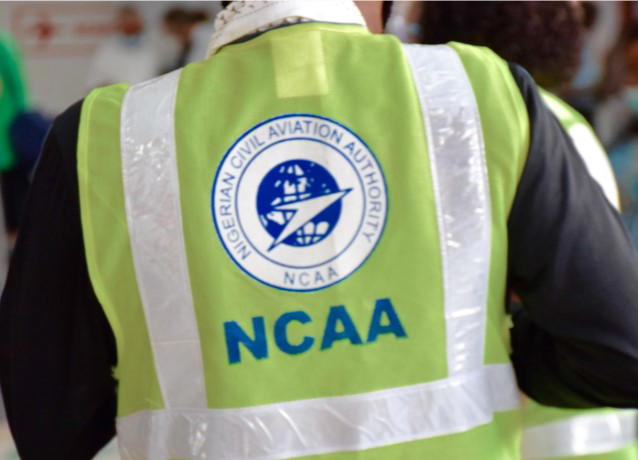
Airline Operators of Nigeria, AON, has faulted the Nigerian Civil Aviation Authority, NCAA, over its earlier decision to withhold services from 11 domestic airlines pending the settlement of their outstanding financial obligations.
Director of Finance and Accounts of NCAA, Olufemi Odukoya, in a memo dated May 22, 2026, obtained by Vanguard, had listed the affected airlines as Air Peace Limited, Ibom Air Limited, Arik Air Limited, United Nigeria Airlines, Umza Air, NGeagle Airline, Max Air Limited, Caverton Helicopters, Overland Airways, Rano Air and ValueJet.
While the NCAA has temporarily suspended the directive, AON, in a statement, disclosed that all services rendered by NCAA to domestic airline operators were fully paid for in advance on a cash-before-service basis.
AON, however, clarified that what the NCAA described as outstanding charges relates to the five per cent Ticket Sales Charge, TSC, which is different from regulatory service fees.
They also urged Federal Government to amend the Civil Aviation Act to empower the NCAA to directly collect appropriate fees and charges from passengers, saying the measure should take effect from June 1, 2026.
The statement reads: “The AON wishes to make it clear that all cost recovery services rendered by the NCAA to domestic airline operators are paid for fully in advance on a cash-before-service basis.
“For clarity, the NCAA issues an invoice for every regulatory service it provides, whether for the validation of crew operating licences, aircraft inspections, documentation renewals, or any other service within its regulatory mandate. Operators are then required to settle all such invoices in advance, and compliance is strictly observed before the NCAA renders any regulatory service.
“In practice, no domestic airline in Nigeria receives NCAA regulatory services without first making the full payment of invoices issued to it by the NCAA. This long-standing policy and procedure remains firmly in place. Consequently, suggestions that domestic airline operators are indebted to the NCAA for regulatory services are factually inaccurate.
“What the NCAA refers to as ‘outstanding charges’ relates solely to the five percent (five per cent) Ticket Sales Charge, TSC, a Tax imposed by the NCAA on passengers for no services rendered to passengers and not in consonance with the dictates of international aviation. This is entirely different from regulatory service fees.
“The AON also notes that several member airlines maintain dedicated accounts, from which the NCAA draws down its monthly remittances, until the force majeure caused by the Iran -Israel/USA conflict, that had put a lot of financial pressures on airlines worldwide.
“Notwithstanding this arrangement, the AON had formally appealed to the federal government through the office of Honourable Minister of Aviation & Aerospace Development, to suspend the payment of all statutory charges temporarily, as an interim measure to assist airlines in managing their cash flows during the current period of severe financial stress caused by the increase in the cost of Jet Al.
“As an interim response, President Bola Tinubu graciously granted a 30 per cent concession, while waiting for the government decision on the other aspects of the AON intervention request. While the AON acknowledges and appreciates this gesture, we had appealed for a meeting with Mr. President to discuss further reliefs, a request that is yet to be granted.
“The AON reiterates its position that the NCAA is a regulatory body, not a revenue-generating agency. The NCAA does not fund any aspect of our businesses or render any direct service to passengers.
“Each and every service it provides to airline operators are fully paid for in advance before such is rendered. In view of the above, the AON calls on federal government to urgently amend the Civil Aviation Act to empower the NCAA to collect whatever appropriate fees and charges are due directly from passengers or whoever else, without routing such through the domestic airlines. We request this to take effect from June 1, 2026.
“This will relieve domestic airlines of the financial burden of acting as collection agents for the NCAA, since airlines currently bear banking transfer charges and other transaction costs in the process of transmitting funds to the NCAA.
“The five per cent Ticket Service Charge in question was introduced over 45 years ago under the Government of General Gowon by the then Federal Civil Aviation Authority, FCAA, and its continued relevance has not been reviewed ever since.
“The FCAA was at the time an arm of the Civil Aviation Department, CAD, housed in Marina under the Ministry of Transportation. As the CAD was not a ministry-level aviation unit, it had limited budgetary resources.
“The Gowon regime of the 1970s had built airports in all 12 States of the federation and these airports required maintenance and operational budgets that were not provided for in the sector’s budget hence the introduction of the five per cent TSC.
“Notably, Nigeria Airways, the only domestic airline operating at the time, did NOT pay the five per cent TSC. Only foreign Airline carriers were required to pay.
“Importantly and worthy of note is the fact that the FCAA has since over time evolved into the NCAA, NAA, and NIMET. The NAA in turn evolved into the present-day FAAN and NAMA.
“Meanwhile, the aviation industry was deregulated in 1982, allowing for indigenous entrepreneurs to compete in the market, resulting in the new entrant private airlines that have remained the mainstay of the industry and the backbone of the Nigerian economic renaissance.
“With the creation of each of these agencies, separate taxes, fees, charges, and levies were introduced for the Nigerian Airline operators to cover their respective services.
“Meanwhile, the five per cent TSC, which was originally a policy instrument was surreptitiously introduced into the legislation by the NCAA, despite the vehement opposition from the AON and other industry stakeholders.
“Domestic airlines, in addition to this five per cent TSC, still pay separately ànd directly for services provided by the various industry agencies, including the NCAA itself.
“It is important to note that the five per cent TSC is an ad valorem tax applied to an airline’s gross earnings, not profits. The global aviation industry operates at a profit margin of between 1.5 per cent and 2.5 per cent at best. International standard and best practice provides that aviation should be a cost-recovery sector of strategic importance. In Nigeria, however, the industry is being subjected to unsustainable financial pressures, in the guise of imposed taxes, fees, charges and levies.
“The AON uses this occasion to once again draw the attention of the Federal Government to the unsustainable burden of these multiple taxes, fees, charges and levies arbitrarily imposed on domestic airline operators. We make payments to the Nigerian Airspace Management Agency, NAMA, the Federal Airports Authority of Nigeria, FAAN, and several other service providers and statutory bodies.
“The financial impact of these taxes, fees, charges and levies is adverse, burdensome and excruciating, especially at this precarious period, when the entire world has been exposed to the exogenous shocks of the Iran – Israel / USA crisis.”
The post Airline operators reject NCAA debt claim appeared first on Vanguard News.