600m people still lack access to electricity – reports
 SKAiF NewsNG SNN
…as Europe leads €15.5bn clean energy drive for Africa
By Favour Ulebor, Abuja
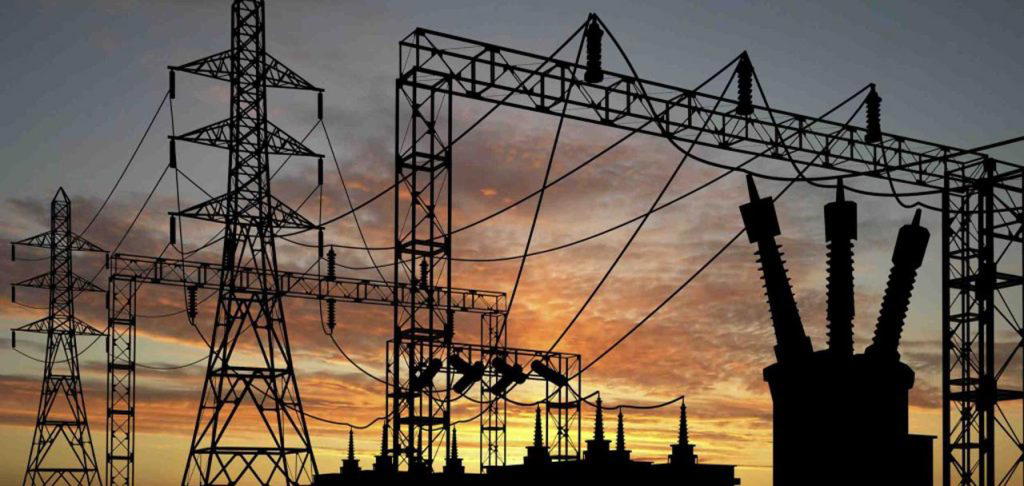
Around 600 million people across Africa still live without access to electricity, according to new reports highlighting the continent’s widening energy gap despite its vast renewable resources.
The situation, experts warn, is becoming more urgent as Africa’s population is projected to double by 2050.
In a press release on Sunday from the European Union, officials stressed that affordable and sustainable energy remains one of Africa’s biggest development challenges.
Despite holding 60 percent of the world’s best solar potential, the continent attracts only 2 percent of global energy investments due to high capital costs, limited financing, and infrastructure barriers.
The EU noted that this growing energy deficit continues to slow economic growth, limit industrialisation, and deprive millions of households of reliable power.
With many rural and peri urban communities still relying on generators and firewood, the need for large scale clean energy solutions has become critical.
It is against this backdrop that Europe has rallied international partners and financial institutions to support Africa’s energy transition, leading a major €15.5 billion investment campaign to boost renewable energy generation and expand electricity access on the continent.
The year long campaign was co led by European Commission President Ursula von der Leyen and South African President Cyril Ramaphosa, in collaboration with Global Citizen and supported by the International Energy Agency.
According to organisers, the European Union alone accounted for more than €15.1 billion of the total pledges.
President von der Leyen described the mobilisation effort as a historic step forward for Africa’s clean energy future.
She said: “Today, the world has stepped up for Africa. With €15.5 billion, we are turbocharging Africa’s clean-energy transition. Millions more people could gain access to electricity; real, life-changing power for families, for businesses, for entire communities.
“This investment is a surge of opportunity: thriving markets, new jobs, and reliable, clean energy that meets the needs of partners across the globe. President Ramaphosa and I both look forward to a clean-energy future for the continent. A future led by Africa, with strong support from its friend and partner, Europe.”
Of the EU’s contribution, over €10 billion was pledged by President von der Leyen on behalf of Team Europe, supported by Member States, the European Investment Bank (€2.1 billion), and the European Bank for Reconstruction and Development (€740 million). Additional bilateral commitments came from Italy (€2.4 billion), Germany (over €2 billion), the Netherlands including FMO (€250 million), Portugal (€113 million), Denmark (€81 million), Sweden (€44 million), Austria (€5 million), and Ireland (€5 million).
The EBRD also pledged over €600 million separately.
Beyond European partners, the African Development Bank announced that it will allocate at least 20 percent of the African Development Fund’s 17th replenishment to renewable energy, while Norway pledged approximately €53 million through its contribution to the Fund for 2026 to 2028.
Overall, the campaign secured commitments expected to generate 26.8 gigawatts of renewable energy and provide electricity access to 17.5 million households currently without reliable power supply.
The “Scaling up Renewables in Africa” campaign was launched in November 2024 to mobilise policy and financial support for clean energy, in line with COP28 goals to triple renewable energy capacity and double energy efficiency worldwide.
Through the Global Gateway strategy and the Africa Europe Green Energy Initiative, the EU says it will continue working with African governments to expand renewable energy generation, strengthen transmission networks, and deepen cross border electricity trade to support the continent’s long-term clean energy transition.
The post 600m people still lack access to electricity – reports appeared first on Vanguard News.