
2027 Presidency: Nigerians must vote for ideas, not moneybags — Onyema
 SKAiF NewsNG SNN
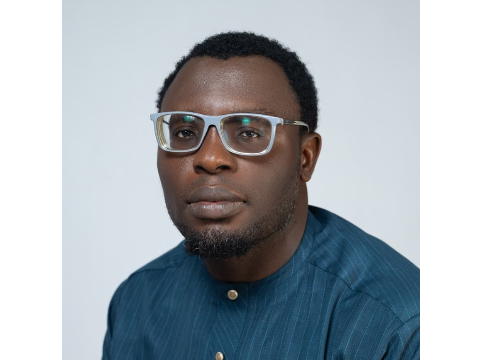
Francis Onyema, a presidential aspirant on the platform of the National Rescue Movement, NRM, believes Nigeria’s politics must move away from money-driven campaigns to an ideological contest of ideas.
In this interview, he speaks on why he joined politics, his presidential ambition, and how he hopes to challenge established political figures in the 2027 elections.
By Gabriel Ewepu
What inspired your decision to go into politics?
My journey into politics did not begin by accident. I studied Political Science at the University of Nigeria, Nsukka, so from quite early I was exposed to ideas about governance, leadership and how societies organise themselves.
But beyond the classroom, what really inspired me was the everyday reality of Nigeria — seeing a country with enormous potential struggle to work for ordinary people. As I observed Nigeria more closely, I began to ask deeper questions about why a country so richly endowed continues to face these challenges.
Interestingly, I came to understand that Nigeria’s problem is not solely that of leadership, but also the context of our relationship with the rest of the world. In fact, I often say that Nigeria’s challenge is not just about who leads us, but whether those who lead us truly understand the world in which Nigeria must compete and survive.
For example, what exactly is our relationship with countries like China, Russia, the United States or Israel? Are these relationships based on mutual respect, or are they largely exploitative?
We must also pay attention to the fierce global competition for scarce resources. If we are to formulate and implement policies that truly advance the well-being of Nigerians, all these variables must be carefully considered. We must constantly ask ourselves whether we are deliberately implementing policies that advance our national interest, or whether we are simply trying to catch up with the rest of the world.
Unfortunately, we have had leaders who fail to fully understand these deeper dynamics that shape national development. In my view, this has contributed to the challenges Nigeria faces today. That realisation is what pushed me into politics — the desire to help close that leadership gap and contribute to building a Nigeria that truly works for everyone.
Have you held any political office before?
No, I have not held any political office before now, and I am aware that this question will continue to come up during my campaign.
During my consultations across the country, people asked me the same question frequently. Some also wanted to know the charity projects I had undertaken over the years.
The concern about political experience is understandable because in our political culture we often assume that a presidential candidate must first have been a governor or senator. But I believe Nigerians must begin to ask a serious question: has that pathway really produced the results they desire?
For instance, President Bola Tinubu was a governor of Lagos State, and before him we also had leaders who were former governors that later became president. Yet we must honestly ask ourselves: has Nigeria fared significantly better under that arrangement?
President Tinubu is often credited with building Lagos. I respectfully disagree with that notion. Lagos was largely built by leaders such as Lateef Jakande.
From my assessment, I honestly doubt that President Tinubu has laid the foundation for sustainable development as President of the Federal Republic of Nigeria. In fact, many of the economic policies currently being implemented closely mirror the prescriptions of institutions like the IMF, often as conditions for further borrowing, and this has placed considerable pressure on our economy.
So the real question before Nigerians is this: should political experience automatically take precedence over competence, ideas and the ability to solve problems?
This is the mental shift I am advocating through the Francis Onyema Reformist Movement. Our search for leadership must extend beyond the traditional political class to individuals who possess clear, practical and well-articulated plans to address the needs of Nigerians.
Elections, in my view, should fundamentally be a contest of ideas.
Why did you decide to run for President?
When I began consulting elder statesmen, some of them advised that I start from lower levels of leadership such as local government chairman or councillor.
But I asked myself a very honest question: how do I address issues like insecurity, unemployment, poor healthcare and the decay in our educational infrastructure from that level of authority?
Many of the problems confronting Nigeria require national policy direction.
What truly pushed me toward partisan politics was an incident that happened in Lagos. A young man lost his life because several hospitals he was taken to lacked oxygen.
That incident deeply troubled me. As a policy advocate at the time, I drafted an improved health auditing proposal and shared it with two senators in the 8th National Assembly. Unfortunately, that bill was never even read for the first time.
That experience made me realise something very important: good ideas alone are not enough if the political will to implement them is absent.
If some of those ideas had been implemented through the National Assembly, I probably would not be in this race today.
Nigeria today needs pragmatic leadership that can lay the foundation for real socio-economic advancement. We need leadership that can secure our borders, reform the police, strengthen institutions and guarantee peaceful coexistence among Nigerians regardless of tribe or religion. That is why I decided to run for the highest office in the land.
Why did you choose the National Rescue Movement as your party?
The National Chairman of the party, Dr. Chinedu Obi, played a major role in my decision.
When I consulted him, I did not just see a party leader. I saw a nationalist genuinely committed to democratic principles and creating a level playing field for everyone within the party.
I also observed that the structure of the party is clearly defined and the hierarchy respected, without unnecessary interference in party processes.
For someone like me who believes strongly in reform and fairness, that was very important.
So I found the National Rescue Movement to be a viable platform because its ideology aligns with what we are trying to achieve through our reformist movement — rescuing Nigeria from the grip of failed leadership through reorientation.
What ideology drives your political ambition?
My political ideology is simple: ordinary Nigerians should have the opportunity to participate in governance and hold political office based on the strength of their ideas.
I believe elections should fundamentally be a contest of ideas. Every election should be a referendum on the best solutions to the needs of Nigerians.
How do you plan to actualise your ambition in 2027?
For aspirants like me who do not belong to the traditional political class to stand a real chance in 2027, there must be a mental shift among Nigerians.
Nigerians must begin to change what they demand and tolerate from those who seek public office.
Reorientation is at the heart of this campaign. Nigerians must see elections as a contest of ideas, not a competition among moneybags.
When we demand leaders who are simply moneybags, we end up with leaders who lack ideas and who see the state as a means of personal enrichment.
Ideas and convincing solutions must come first.
Beyond that, Nigerians must understand that building a nation requires sacrifice. We must gradually move away from practices like selling our votes or aiding electoral malpractice for small personal gains.
What political structure do you have to support your ambition?
I understand the importance of political structures in Nigerian elections. While the Francis Onyema Reformist Movement already has members across many of the 36 states, we are still working to attract more Nigerians who believe in our ideology.
Fundamentally, strong political structures are built around compelling ideas. Our movement is based on the belief that governance must work for ordinary Nigerians.
I am confident that, in time, more Nigerians will recognise this vision and join the movement.
How do you intend to challenge established figures like President Tinubu and Peter Obi?
The question Nigerians should ask is simple: what are the ideas of these respected leaders to tackle insecurity, unemployment and other pressing challenges? Are their ideas more sophisticated than mine? Are they willing to engage in debates so Nigerians can make informed choices?
Beyond debates, can they clearly demonstrate how their policies will address these issues?
For example, can they show exactly how border control will be improved to tackle drug trafficking, arms smuggling and crude oil theft? Can they also demonstrate how they intend to reform the excesses within the Nigeria Police Force?
Nigerians must adopt the phrase “show working” when assessing those seeking to govern them. We must no longer accept vague promises like “we will create jobs.” The real question should be: how exactly will you create these jobs? Demonstrate it.
With that level of critical assessment by Nigerians, I believe I can defeat President Bola Tinubu, Peter Obi and others in a free and fair contest.
What is the Francis Onyema Reformist Movement, FORM, about?
The Francis Onyema Reformist Movement, FORM, was designed to play a key role in reorienting Nigerians on politics, leadership and development.
Since our campaign is centred on reorientation, FORM serves as a strategic platform to help change Nigeria’s socio-political culture.
To support this effort, I wrote a leadership reform document titled “From the Political Class to the Reformist Class.”
The idea behind the essay is simple: our search for credible leaders must extend beyond the traditional political class to individuals who have convincing plans to address the needs of Nigerians. That is the ideology driving FORM.
For too long, Nigeria has operated a system where incompetent leadership is rewarded over reform-driven individuals. FORM is our effort to change that narrative and redirect Nigeria’s political trajectory after decades of missed opportunities.
Do you believe you can become Nigeria’s next President in 2027?
Ultimately, that decision lies with Nigerians. My responsibility is to present clear ideas and a convincing plan to make Nigeria work for everyone. The Nigerian people will decide in 2027.
The post 2027 Presidency: Nigerians must vote for ideas, not moneybags — Onyema appeared first on Vanguard News.









