2027 Elections: INEC raises alarm, warns violence may hurt polls
 SKAiF NewsNG SNN

By Ikechukwu Nnochiri and Omeiza Ajayi
ABUJA — Chairman of the Independent National Electoral Commission, INEC, Prof. Joash Amupitan, yesterday, warned that the raging waves of political violence could harm the 2027 general elections.
Listing Lagos, Edo, Ekiti, Enugu, Ebonyi, Delta, Cross River, Oyo and Benue as states where incidents of political violence had been recorded, he warned political parties and their supporters against violence, intimidation and the use of thugs, saying such activities could discourage voter participation and undermine the credibility of the 2027 elections.
He also cautioned political parties against signing peace accords in Abuja while allegedly sponsoring violence in states, insisting that no political ambition was worth the blood of Nigerians.
According to him, attacks have targeted campaign convoys, town hall meetings, party offices and supporters, while INEC officials, staff and ad hoc personnel have also suffered harassment, intimidation and physical attacks by supporters and agents of political parties, both within Nigeria and abroad.
It also said it was working with closely with the Nigeria Police Force and allied security agencies to prosecute electoral offenders.
The warning came as INEC and security agencies met in Abuja to strengthen election security ahead of the 2027 polls.
This came as the Federal Government assured voters, politicians, electoral officials and political parties of protection before, during and after the elections.
Speaking at a Strategic Election Security Conference jointly convened by INEC and the Office of the National Security Adviser, ONSA, Amupitan said Nigeria had witnessed a disturbing escalation in political intolerance, inflammatory rhetoric and coordinated attacks since the commencement of campaigns in August 2026.
Addressing political parties, he said: “Signing peace accords in Abuja while tolerating or financing thuggery in the states is a contradiction our democracy can no longer afford.”
He warned that INEC would not succumb to threats or intimidation.
“We will neither be intimidated nor blackmailed into compromising our neutrality, and every attack on INEC personnel, facilities, or materials will be met with the full weight of the law,” INEC chairman said.
Amupitan said responsibility for electoral violence extended beyond those directly involved in attacks, stressing that political party leaders must be held accountable for the conduct of their candidates and supporters.
He said: “Accountability does not end with the foot soldiers who throw stones or wield weapons,” adding that “party leadership bears moral and political responsibility for the conduct of its candidates, campaign councils, and youth wings”.
Violence may suppress voter turnout
The INEC chairman identified three major consequences of political violence for the electoral process, including voter suppression, threats to the safety of electoral personnel and the possibility of post-election violence.
On voter suppression, he said: “When bullets replace ballots and rallies end in bloodshed, ordinary citizens stay home, effectively disenfranchising millions of peaceful Nigerians.”
He said the second concern was the safety of more than 1.41 million ad hoc personnel, most of them National Youth Service Corps, NYSC, members, to be deployed across 177,299 polling units.
“No parent or institution will willingly deploy young Nigerians into environments where political thugs operate with impunity,” he said.
On the third consequence, Amupitan warned that violence before elections could create an atmosphere of hostility and rejection after the announcement of results.
“Pre-election violence conditions the political climate for post-election rejection,” he said, warning that collation centres could become flashpoints.
He said the need to get elections right in Nigeria is because of the regional implications. The country accounts for more than half of West Africa’s population.
A peaceful election, he said, would serve as “the primary anchor of regional stability and constitutional order”.
Faults arrest provision
Turning to enforcement, Amupitan expressed concern over a provision in the Regulations and Guidelines for the Conduct of Elections, 2026, which allows security agents to arrest electoral offenders only on the instruction of presiding officers or other INEC officials.
“This dichotomy has hampered the efficiency of the law enforcement agents to arrest and investigate electoral offenders,” he said.
He noted that the same regulations empowered security agencies to prevent violence and activities capable of disrupting elections.
The chairman called for the issue to be addressed through a code of conduct and a proposed legal framework for the Inter-Agency Consultative Committee on Election Security, ICCES.
He said the Electoral Act 2026 had increased penalties for electoral offences to fines of up to N5 million or 12 months’ imprisonment for individuals, while political parties could face fines of up to N10 million for first breaches.
Amupitan added that Section 148 of the Act empowered INEC legal officers and appointed counsel to prosecute electoral offenders directly once case files were transmitted by the police and other relevant agencies.
“INEC is fully prepared to discharge its prosecutorial mandate, and our legal teams are ready to review case files from recent violent incidents across the federation,” he said.
Amupitan added: “When political actors see prominent sponsors and foot soldiers swiftly arrested, arraigned, and convicted under the 2026 Act, the incentive for violent campaigns will evaporate.”
Over 100m verified voters
Providing an update on preparations for the elections at the commission’s meeting with Resident Electoral Commissioners, RECs, from the 36 states and the Federal Capital Territory, FCT, Amupitan said INEC was managing a verified voter register of more than 100 million.
He said the commission had removed more than 1.6 million invalid, duplicated and deceased records from its supplementary voters’ register following the application of an Automated Biometric Identification System, ABIS, and a statutory claims and objections audit.
The exercise reduced the earlier figure of 103 million registered voters to more than 100 million verified records.
Amupitan also disclosed that INEC had selected 17,676 polling units for its Bimodal Voter Accreditation System, BVAS, mock accreditation and result upload exercise scheduled for Saturday, November 28, 2026, ahead of the 2027 general elections.
He urged security commanders to treat the exercise as a full-scale rehearsal for the elections.
The INEC chairman said the presidential and National Assembly elections would hold on Saturday, January 16, 2027, while governorship and state Houses of Assembly elections would take place on Saturday, February 6, 2027.
FG assures voters, politicians of protection
Meanwhile, the National Security Adviser, NSA, Mallam Nuhu Ribadu, assured Nigerians that the Federal Government and security agencies would protect voters, politicians, electoral officials and political parties before, during and after the elections.
Ribadu, who spoke at the conference, said the administration of President Bola Tinubu was committed to providing the security required for peaceful, transparent and credible elections.
“The duty of government and the security agencies is to protect voters, electoral officials and the wider population before, during and after the election. We will protect you. We will protect the voters. We will protect politicians. And even after the election, we will make sure there is no violence,” he declared.
He pledged that security agencies would operate impartially and in accordance with the law.
“Security agencies will discharge their responsibilities impartially and in accordance with the law,” he said.
Ribadu said constitutional independence must be respected, particularly with a professor of law heading INEC.
He also identified social media misinformation as a major threat to electoral security, warning that false narratives could trigger violence.
“Social media is a big problem. It creates false narratives and misinformation, causing problems among people. One individual, sitting somewhere in a village, could say something that triggers trouble,” he said.
The NSA also cautioned politicians against desperate actions in their quest for political power.
“Sometimes they become desperate. There is almost nothing they may not do,” he said.
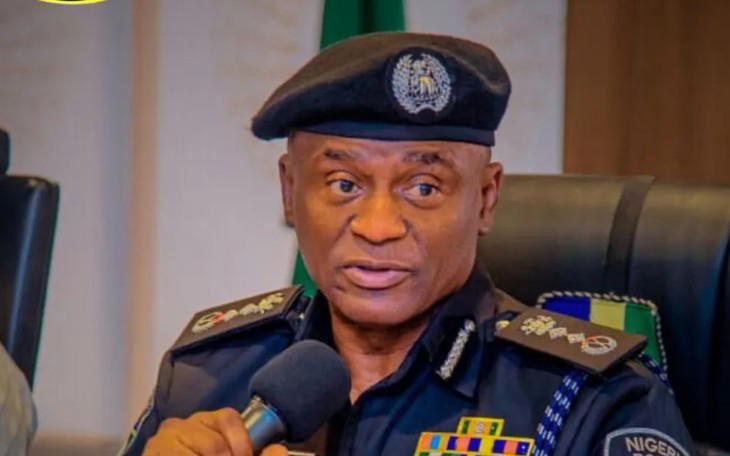
Earlier, the Inspector-General of Police, Tunji Disu, called for improved collaboration, intelligence sharing and coordinated security operations among relevant agencies to address potential threats to the electoral process.
The meeting was attended by the NSA, the IGP, Director-General of the State Security Service, Oluwatosin Ajayi, and other security and electoral officials.
We’re working with security agencies to prosecute offenders – INEC
Meanwhile, Amupitan, SAN, who spoke at the opening session of the 2026 Annual Conference of the National Association of Judiciary Correspondents, NAJUC, in Abuja, said the Commission would initiate action against identified offenders upon receipt of investigative case files from the relevant security agencies.
In a goodwill message by his Chief Press Secretary, CPS, Mr. Adedayo Oketola, the INEC Chairman insisted that the integrity of Nigeria’s democratic process depends on seamless institutional synergy between those who conduct elections and those who adjudicate electoral disputes.
“When the polling unit produces credible records and the tribunal applies the law with dispatch and consistency, public trust in both the ballot and the verdict is reinforced.
“Public confidence in democracy erodes whenever citizens perceive that elections are won in the courtroom rather than at the polling unit — or, conversely, when judicial processes are weaponised through frivolous pre-election and post-election litigation.
“Equally damaging is the distortion of judicial pronouncements in public discourse, where nuanced rulings are stripped of legal context and weaponised to inflame political tension.
“We need an electoral commission that conducts transparent, verifiable polls; political parties that respect internal democracy and the rule of law; courts that dispense predictable, substantial justice; and a judiciary press corps committed to precision and fairness.
“For INEC, the best way to ease the litigation burden on our courts ahead of the Presidential and National Assembly elections on January 16, 2027, and the governorship and state Houses of Assembly polls on February 6, 2027, starting with our nationwide mock accreditation and result transmission exercise this November 28, 2026, is to eliminate administrative ambiguity at the source.”
Meanwhile, in his presentation, the immediate past President of the Nigerian Bar Association, NBA, Mr. Afam Osigwe, SAN, who was the lead speaker at the conference, said he was worried that moneybags were hijacking elections in the country.
“The type of electoral process we have is making it difficult for honest persons to contest elections. Moneybags are hijacking the elections.
“Wrong persons who have no business seeking leadership positions are the ones fighting for elective offices, and it should not be that way,” Osigwe stated.
He argued that courts should not be involved in determining who represents a political party at an election.
The NBA President, Mrs. Oyinkansola Badejo-Okusanya, SAN, who was represented by Dr. Prince Azubuike, said electoral credibility depends not only on free, fair and transparent elections but also on the integrity of the judicial processes through which disputes are determined.
The post 2027 Elections: INEC raises alarm, warns violence may hurt polls appeared first on Vanguard News.