Reps threaten action against Science Minister over bill
 SKAiF NewsNG SNN
By Gift ChapiOdekina, Abuja
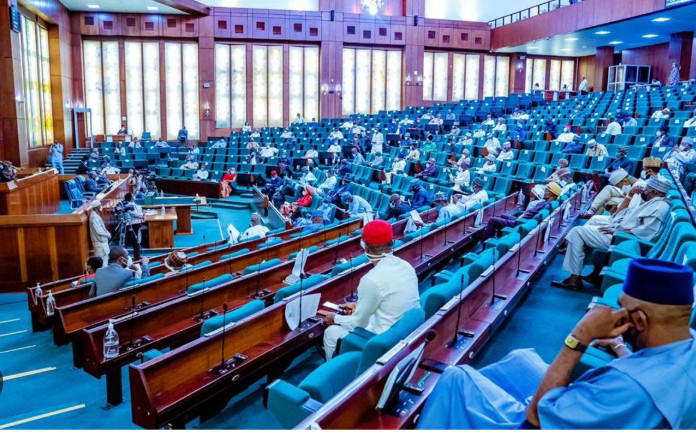
The House of Representatives has threatened legislative action against the Minister of Innovation, Science and Technology, Dr Kingsley Tochukwu Udeh, over his failure to attend a public hearing on a bill seeking to establish a National Research and Innovation Development Fund.
The lawmakers warned that the ministry’s absence could delay the proposed legislation and undermine President Bola Tinubu’s efforts to attract international research grants and funding from development partners, donor agencies, United Nations organisations and Nigerians in the diaspora.
The House Committee on Science and Technology expressed displeasure that neither the minister nor the ministry’s Permanent Secretary or any senior representative attended the hearing, despite the ministry’s direct responsibility for the subject matter of the bill, HB 2821.
The committee also noted that the proposed legislation was sponsored by the executive and transmitted to the National Assembly by President Tinubu.
Speaking at the hearing, a member of the committee, Hon. Ahmed Usman Jaha, representing Chibok, Damboa and Gwoza Federal Constituency of Borno State, described the ministry’s absence as a possible act of sabotage against the working relationship between the executive and legislative arms of government.
Jaha, who spoke on behalf of the committee, said it was difficult to understand why a ministry directly concerned with an executive-sponsored bill of national importance would fail to participate in its consideration.
“Unfortunately, some members of the executive are by extension sabotaging this relationship. The reason why I call it sabotage is that I see no reason whereby the executive can present a bill to the House for consideration, and that bill has national importance, but the ministry responsible for it will not show up,” he said.
He disclosed that the committee had invited the Ministers of Justice, Innovation, Science and Technology, Education, Environment, Agriculture and Food Security, Health, Livestock Development, and Industry, Trade and Investment, alongside other stakeholders, to contribute to the legislative process.
However, none of the invited ministers attended the hearing.
Jaha said the absence of the Science and Technology Minister was particularly concerning, insisting that either the minister or the Permanent Secretary should have appeared before the committee.
“We are not averse to the Ministry of Justice and other ministries that are not directly linked to the bill. But our concern this time around is the Ministry of Science and Technology. If any minister may not have time to attend, they may end up sending representatives. But the Minister of Science and Technology himself, who is more or less the sponsor of the bill, or in a worst-case scenario, the Permanent Secretary, must show up,” he said.
The lawmaker further expressed concern that an international stakeholder who travelled from Kenya honoured the committee’s invitation, while the ministry directly responsible for the proposed legislation failed to participate.
He cited the African Technology Policy Studies Network, whose representative reportedly informed the committee that several African countries had established national research and innovation funds, while Nigeria was yet to establish a similar framework despite its research potential.
Jaha said the committee had given the minister and Permanent Secretary another opportunity to appear before the conclusion of the public hearing, warning that their continued absence would compel lawmakers to move a motion of urgent public importance at the next sitting of the House.
He said the motion would bring the ministry’s conduct to the attention of the House and the Nigerian public.
“With this attitude, they will end up delaying the bill. Maybe Mr President is trying to expedite the process of establishing this agency so that Nigeria can benefit from research grants from donor agencies, the diaspora, international communities, UN agencies and international non-governmental organisations willing to fund research,” he said.
Jaha maintained that the hearing also provided an opportunity for the minister to raise objections, identify contentious provisions and propose amendments to the bill.
He warned that failure to engage with the proposed reforms could undermine Nigeria’s ambition to reposition its research and innovation sector and attract international funding.
Committee seeks sustainable funding, accountability
Earlier, Chairman of the House Committee on Science and Technology, Hon. Zakariya Tijjani Zannah, called for a sustainable financing structure, transparent governance and an independent grant allocation mechanism for the proposed fund.
Zannah said Nigeria had the intellectual capacity and research talent to drive technological advancement but lacked a dependable legal and institutional framework to finance research, coordinate activities and translate scientific discoveries into commercially viable products.
“No nation has grown its economy or secured its food and health without sustained investment in research and innovation. Nigeria has the talent; what we lack is a dependable legal and institutional framework to fund, coordinate and carry research from the laboratory to the marketplace,” he said.
He urged stakeholders to scrutinise the proposed governance structure of the National Council on Research and Innovation and the management of the fund, particularly the respective responsibilities of its leadership, Managing Director/Chief Executive Officer, three General Managers, General Counsel and Joint Ministerial Committee on budgets.
On financing, Zannah called for a critical examination of the proposed 20 per cent contribution from the Nigerian Content Development Fund under Section 19 of the bill, alongside government appropriations, grants and proceeds from commercialisation.
He also urged stakeholders to assess the proposed 2.5 per cent cap on administrative expenditure under Section 21 to determine its legal basis, adequacy and long-term sustainability.
On research grants and commercialisation, the committee chairman emphasised the need for competitive, peer-reviewed grant allocation under Section 34 and adequate intellectual property protections under Section 37.
He added that provisions on offences, penalties and legal proceedings under Part V should be reviewed to ensure the protection of public funds without creating unnecessary obstacles to legitimate research activities.
Speaker warns against political interference
Declaring the hearing open, Speaker of the House, Hon. Abbas Tajudeen, represented by the Deputy House Leader, Hon. Abdullahi Halims, described the proposed legislation as critical to Nigeria’s economic transformation and competitiveness in an increasingly knowledge-driven global economy.
The Speaker called for transparency, accountability and merit-based allocation of research grants, warning against arbitrary interference and political considerations in the administration of the proposed fund.
He noted that Nigeria had considerable intellectual and creative resources in its universities, research institutions, professional communities, young population, entrepreneurs and diaspora but had failed to effectively connect these resources to the productive needs of the economy.
According to him, research activities in the country often ended with academic publications rather than practical applications, while promising innovations struggled to secure financing and commercially viable discoveries remained trapped in laboratories.
“The challenge, therefore, is not simply to produce more research, but to build an ecosystem that connects research to funding, innovation to investment, and discoveries to industry. This is the institutional gap that the Bill seeks to address,” he said.
Tajudeen said the proposed National Research and Innovation Development Fund and National Council on Research and Innovation, to be chaired by the Vice-President, would provide an institutional framework for coordinating national research priorities, ensuring sustainable financing and promoting the commercialisation of research outcomes.
He, however, stressed that the success of the proposed institutions would depend on sound governance, transparent administration and clear accountability mechanisms.
The Speaker insisted that research grants must be awarded based on merit, scientific relevance and demonstrable potential, without political interference.
He also called for a thorough examination of the proposed funding arrangements, particularly the contribution from the Nigerian Content Development Fund, to ensure compliance with existing laws, financial sustainability and compatibility with statutory obligations.
“Research requires continuity, and the Fund must have a dependable financial foundation capable of supporting long-term objectives,” he said.
Tajudeen further advocated strong intellectual property and commercialisation provisions to protect researchers, recognise institutional contributions, attract private investment and safeguard the public interest.
He cautioned against restricting access to research funding to established universities and major research centres, insisting that polytechnics, specialised research institutes, emerging technology enterprises and independent innovators must also have opportunities to benefit.
Recalling previous legislative efforts to establish a national research and innovation framework that failed to produce an enacted law, the Speaker said the 10th House had an opportunity to resolve outstanding governance and financing concerns and bring the initiative to fruition.
He urged stakeholders to make specific recommendations on governance, funding, grant administration, intellectual property, commercialisation and accountability rather than offer general endorsements of the bill.
The Speaker charged the committee to conduct its proceedings with fairness, diligence and intellectual openness, stressing that no provision should be beyond scrutiny.
He said Nigeria must move beyond acknowledging the importance of research and innovation to building institutions that make investment in knowledge and technological development a national priority.
According to him, the country’s development could not continue to depend on imported solutions to challenges that Nigerians had the intellectual capacity to address.
“This is not merely a scientific imperative; it is a question of economic independence and national competitiveness,” he said.
The post Reps threaten action against Science Minister over bill appeared first on Vanguard News.