Opposition must unite or surrender, by Ochereome Nnanna
 SKAiF NewsNG SNN
The combined opposition parties seeking to unseat President Bola Tinubu in the 2027 presidential election are merely displaying the usual reflex of our political culture. Hardly has any presidential election taken place in Nigeria’s history without attempts being made by the combined opposition to try this old trick, especially against an incumbent president seeking re-election. They all failed: in 1983 against President Shehu Shagari, in 2003 against President Olusegun Obasanjo, and in 2011 against President Goodluck Jonathan.
But in 2015, the All Progressives Congress (APC) became the first opposition party to crack the code, defeat an incumbent president, and take over power. If we look at what is on ground today, four months to the presidential elections, and what obtained at the same period in 2015, we’ll find that the current opposition community is far from it. Between 2013 and 2015, the parties that collapsed into the APC, and their leaderships, made unprecedented sacrifices. Bola Ahmed Tinubu, leader of the Action Congress of Nigeria (ACN) with six South-West states plus Edo, was willing to dissolve his party into Muhammadu Buhari’s Congress for Progressive Change (CPC) to form a brand-new political party, along with other smaller political interests.
Tinubu offered Buhari the first shot at the presidency, after which he would have his go. Going by political history, it was a dangerous proposition because Fulani presidents have always sought to exploit such alliances to their advantage by supplanting their political allies in their areas of control. Fortunately for Tinubu, Buhari was a typical figurehead and not the General Shehu Yar’Adua kind of hands-on politician who could do that. Secondly, Buhari, as president, was too sick to engage in such adventures. Thirdly, the death of Abba Kyari from Covid-19 in March 2020 put paid to any dream of Buhari’s power beyond 2023. Kyari was Buhari’s political brainbox, and his sudden demise afforded Tinubu the room to manoeuvre his way to power despite Buhari’s wishes to the contrary.
Beyond all these, the ruling People’s Democratic Party (PDP) under Jonathan had frayed irreparably. The governors of five PDP states – Rotimi Amaechi of Rivers, Musa Kwankwaso of Kano, Magatakarda Wamakko of Sokoto, Abdulfatah Ahmed of Kwara, and Murtala Nyako of Adamawa – joined the APC, as did Rochas Okorocha of APGA. With Boko Haram terrorism, the America-led Western alliance against Jonathan, and Buhari’s threats of “war” if he lost the 2015 election, the stage was set for the unprecedented change we saw in 2015.
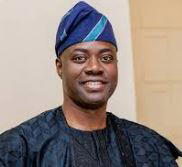
What are the situations on ground today, by contrast? Five months to the elections, Tinubu sits pretty atop the largest number of states ever controlled by a ruling party. Only Abia, Anambra, Bauchi, Osun, and Oyo States are outside the party. Even at that, Ademola Adeleke of Osun has pledged his loyalty to Tinubu for the presidential election. Also, Tinubu’s 72 APC senators and 280 House of Representatives members, council chairmen, councillors, and House of Assembly members pavilion the APC with an intimidating nationwide structure that has never been seen before. On the other hand, the combined opposition can only count on one governor – Seyi Makinde of Oyo. Even at that, Makinde has in the past proved unreliable. In 2023, he switched over to Tinubu at the last minute despite being a PDP governor. He can do it again for self-preservation, more so as his tenure is expiring after the elections in 2027.
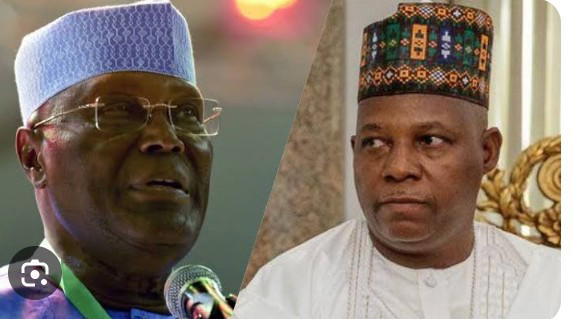
The opposition of today don’t seem prepared to make the APC sacrifice. Atiku Abubakar, despite his advanced age, serial electoral failures, and waning popularity, has obstinately refused to give way to his former running mate, Peter Obi, who is easily the most popular politician in Nigeria today. If Atiku should agree to step down for Obi, the opposition can still capitalise on Tinubu’s disastrous economic and security performance to rally the electorate for a popular change of government. The APC federal government is very vulnerable when the questionable personal records of their flagbearer, Tinubu, are factored in. APC’s recruitment of convicted ex-governors, Joshua Dariye of Plateau and Jolly Nyame of Taraba, as well as the nomination of Ms Betta Edu (who was sacked for alleged stealing of over N500m as Humanitarian Affairs Minister) into its presidential campaign group, show that Tinubu does not care what people say about his condonation of corruption.
Despite its enormous political structure and unlimited depth of financial war chest, if the opposition can rally the people away from a party that has posted the worst record of performance and public image in our history, anything can happen. But first, the opposition must unite and put Nigeria above their individual differences and interests. Tinubu is not Jonathan. This man is a genuine political titan. He has confirmed that he planned and executed his presidential ambition over 30 years, with possibly trillions of naira thrown in.
Buhari did not want to hand over power to him. Buhari tried to impose Jonathan, and later former Senate President Ahmed Lawan, as his successor. Buhari also tried to use the so-called “Naira Reform” to throw Tinubu under the bus. Tinubu cried out in Abeokuta: “Emi l’okan!” (“It is my turn”). He also told Buhari: “We will vote, and we will win!” When it became obvious to Buhari that Tinubu’s loss would mean possibly the PDP coming back, he fully threw the “federal might” behind Tinubu. He even showed his ballot paper, indicating he voted for him. Even if the opposition parties unite, Tinubu is a politician who is not afraid to use money. “What money cannot do, more money can do,” as Senator Godswill Akpabio would say. Some of the opposition leaders may have to choose between a putative Peter Obi administration that could channel public funds away from politicians to the people, and cashing out of the coalition with promises of more to come. Anything can happen.
The post Opposition must unite or surrender, by Ochereome Nnanna appeared first on Vanguard News.