Let ideas dominate the campaigns
 SKAiF NewsNG SNN
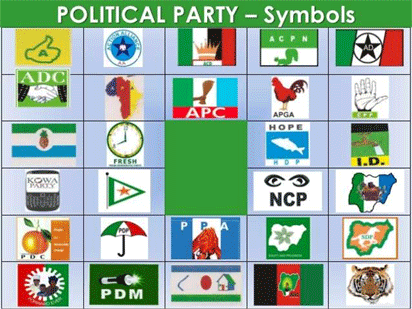
The August 19, 2026 date fixed by the Independent National Electoral Commission (INEC) for the commencement of campaigns for the 2027 Presidential and National Assembly Elections has passed. Once again, Nigeria has entered another election season, bringing with it the familiar sights and sounds of rallies, endorsements, defections, slogans, promises and political fireworks. But Nigerians must demand more than spectacle. The 2027 campaign should be a campaign of ideas, policies, programmes and measurable commitments. The country can no longer afford elections driven principally by personalities, ethnicity, religion, money, propaganda and emotional mobilisation. Candidates should invest more time, energy and resources persuading the electorate about their own eligibility rather than attacking opponents.
Nigerians deserve a serious political conversation about how to address the country’s deep-rooted economic, security and institutional challenges. The high cost of living continues to squeeze households. Insecurity threatens lives, livelihoods and investments. Unemployment remains widespread, while deficiencies in electricity, infrastructure, healthcare, education and public institutions constrain development. The campaign period provides candidates with an opportunity to tell Nigerians, clearly and practically, how they intend to tackle these problems. At the signing of the 2027 National Peace Accord, political actors were rightly urged to shun hate speech, misinformation, personal attacks and character assassination, and compete instead on ideas, policies and programmes. Candidates must therefore explain how they intend to reduce inflation, create productive jobs rather than political appointments, strengthen the naira, attract investment, improve the business environment, expand electricity, and confront insecurity through a more effective security architecture.
Mere campaign slogans are no longer enough. Candidates must tell Nigerians how, when, at what cost and with what measurable targets they intend to deliver their promises. Political parties, too, must take their manifestoes seriously. A manifesto should be more than an election document produced for publicity. It should constitute a social contract on which citizens can assess a government at the end of its tenure. Nigerians should be able to ask, four years later, which promises were fulfilled, which were not and why. Civil society organisations, professional bodies, academics, the business community and the media have an important role in this process. They should rigorously interrogate the manifestoes, test the feasibility of proposed policies and expose unrealistic promises. Above all, voters must resist the temptation to support candidates merely because they share their ethnicity, religion, region or political affiliation. Nigeria cannot afford another election in which identity matters more than competence, character, experience and policy. Say no to ethnic profiling.
The 2027 presidential election should therefore be more than a contest for occupancy of Aso Rock. It should be a national debate about the policies and leadership philosophy that will shape Nigeria’s next four years and its future. The election must be a referendum on ideas and performance, not identity and bellicosity.
The post Let ideas dominate the campaigns appeared first on Vanguard News.