Alleged Cybercrime: Court returns Sowore to Kuje prison
 SKAiF NewsNG SNN
…as protesters storm Justice Ministry to demand his release
By Ikechukwu Nnochiri
ABUJA — The Federal High Court sitting in Abuja, on Wednesday, returned activist and presidential candidate of the African Action Congress (AAC), Omoyele Sowore, to Kuje prison.
Trial Justice Mohammed Umar held that he should remain in custody until June 30, when the application he filed to challenge the revocation of his bail will be determined.
Sowore, who is facing a two-count cybercrime charge filed against him by the Department of State Services (DSS) for calling President Bola Tinubu a “criminal” in a social media post, had, at the resumed proceedings, asked the court to vacate an order he made on June 16 which revoked his bail and ordered his arrest.
Represented by a team of lawyers led by Mr. R. O. Adakole from the chambers of Adeyinka Olumide-Fusika, SAN, the defendant urged the court to restore the bail that was earlier granted to him and set aside the bench warrant for his arrest.
In the application, anchored on section 36 of the 1999 Constitution, as amended, as well as sections 169 and 352 of the Administration of Criminal Justice Act (ACJA) 2015, Sowore contended that the orders made against him were unjust and unwarranted.
In response, the prosecution counsel, Mr. Akinlolu Kehinde, SAN, urged the court to refuse the application and proceed with the trial of the defendant.
He contended that the defendant had failed to adduce sufficient and truthful reasons why the court should exercise its discretion in his favour.
After listening to both sides, Justice Mohammed Umar adjourned for ruling.
It will be recalled that Justice Umar had, last Monday, ordered Sowore’s remand in Kuje prison following the revocation of his bail for failing to appear for the continuation of his trial.
The trial judge also dismissed a motion that sought his recusal from presiding over the trial on the ground of alleged bias.
The court held that the defendant had failed to adduce any verifiable evidence to support his reason for asking the judge to step down from the trial.
On the day he failed to appear for his trial, Sowore had sent a letter to the court requesting a reschedule.
In the letter, addressed to the Deputy Chief Registrar, Sowore drew attention to the fact that he had been in court the previous day, which was the date the case was originally slated for, but the judge was not on the bench, with no reason given for his absence.
Sowore, who had no legal representation at the time, recommended eight dates for the court’s consideration.
However, following an oral application by the prosecution, the court revoked the bail and ordered the defendant’s arrest.
The defendant had asked the judge to withdraw from the case and remit the case file to the Chief Judge for reassignment to another judge.
In the application, hinged on Section 36(1)(5)(6) of the 1999 Constitution as amended, he accused Justice Umar of bias, referencing an incident in which his lawyer was ordered to kneel before the court.
He said his lawyers had been scared off by the court’s decision to hear the case on a day-to-day basis, as well as by what he described as the judge’s high-handedness.
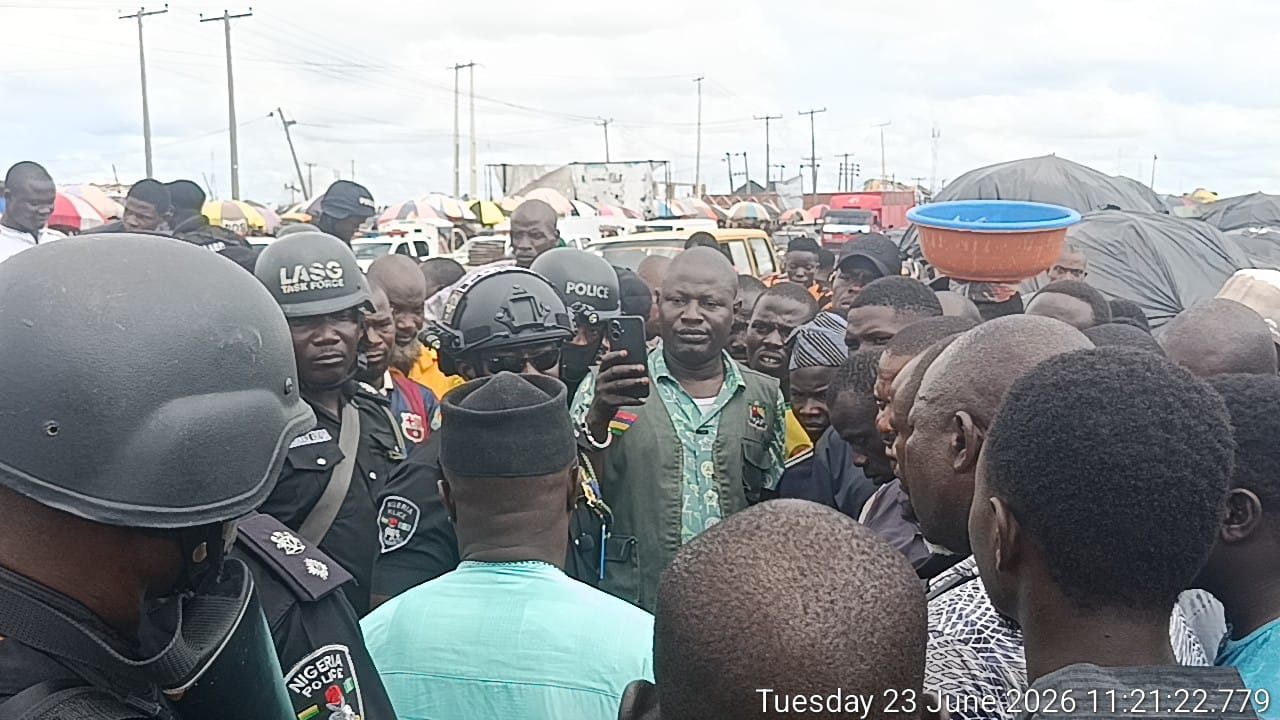
Meanwhile, scores of placard-wielding protesters, on Wednesday, besieged the Federal Ministry of Justice headquarters in Abuja, which houses the office of the Attorney General of the Federation, to demand Sowore’s release from detention.
The protesters were earlier barred from gaining access to the court premises by armed security operatives.
The defendant, who was arraigned on the charge marked FHC/ABJ/CR/484/2025 on December 2, 2025, pleaded not guilty.
The charges allege offences under Sections 24(1)(b) and 24(2)(a), (b), and (c) of the Cybercrimes (Prohibition, Prevention, Etc.) (Amendment) Act, 2024.
The posts, dated August 25, 2025, were made in response to President Tinubu’s claim, made in Brazil, that his administration had ended corruption in Nigeria.
Angered by the posts, the DSS demanded that X Inc. (formerly Twitter) and Meta Platforms Inc. ban Sowore’s accounts and remove the posts.
The security agency also wrote to Sowore, asking him to delete the posts from all platforms.
Non-compliance with the request led to the charges.
The prosecution claims the defamatory posts were intended to cause a breakdown of law and order and to tarnish the president’s reputation.
Exhibits include printouts of the posts and the DSS letters.
X Inc. and Meta were initially co-defendants but were delisted in the amended charge.
The post Alleged Cybercrime: Court returns Sowore to Kuje prison appeared first on Vanguard News.